Posted in Being Healthy, Current Events

I tried THINX period panties and…

CeCe's THINX Panties
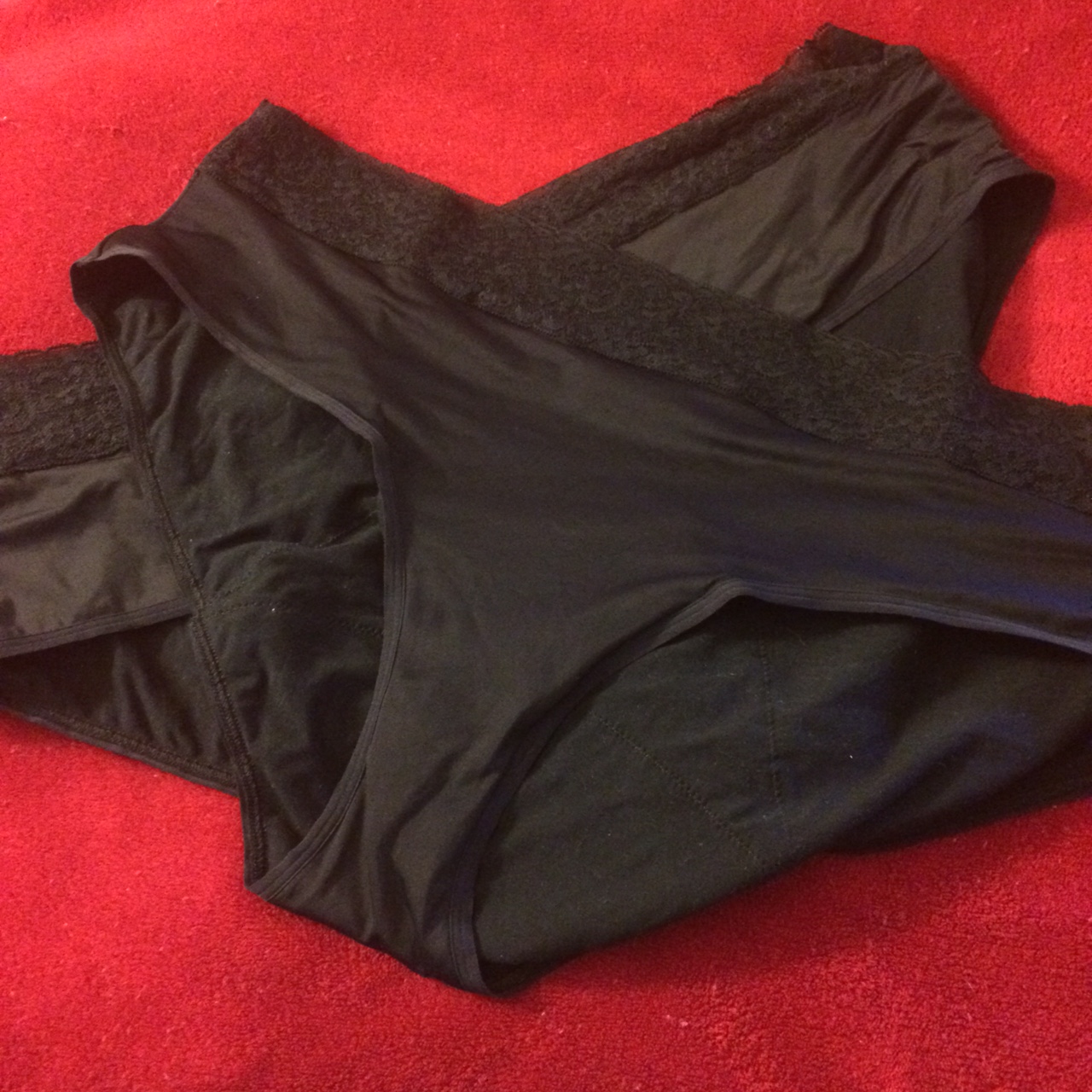
2 of the 3 pair of THINX I purchased; I’m wearing the 3rd pair now.

I’m keeping them. And getting some more!

NOTE: The following account of my trial of THINX is completely unsolicited and unpaid; I paid regular price out of my pocket for these period panties and have had no communication with THINX other than the purchase transaction.

Here’s why I tried them:

Aside from performance, I’m always looking for a more sustainable way to manage hygiene, and these are reusable with no solid waste to cause biodegradability concerns.

That comes with the added benefit of being more cost effective in the long run; I estimate it will take 2 months per pair of panties for the cost equivalency of my current disposable method.

And then there’s the education and supply mission of the company: for every pair I purchase, they donate a pair to a woman in a country where period products are simply not available, where girls are banished to a shed for their week a month, missing school, work, income opportunities, etc. Like Tom’s shoes in that way.

Here’s what I chose as my trial kit:

For starters, I got 3 pair (best discount) of the hiphugger style to try; it’s one of two styles designed for “heavy days”. If I don’t like them (doesn’t seem like that will be the case), I simply send them back for a refund – even if I’ve used them.

I ordered the 2x, which is currently their largest size. For sizing comparison, I wear a 22 or 24 in pants without stretch, 20 in pants with stretch.

Here’s my period profile:

So that you can judge how THINX would perform for you, it’s necessary for me to disclose my period profile. I’m a 100% free-bleeder, using pads exclusively.

My period lasts almost exactly 5 days:

  • First 12 hours: comparable to spotting
  • Next 24 hours: what I consider regular, using 1 pad per 12 hours
  • Next 24 hours: what I consider heavy, using 1 pad per 6 hours largely due to clotting – really tricky for the overnight
  • Next 48 hours: return to regular, sometimes with a 4-6 hour period with no bleeding at all
  • Next 12 hours: spotting through completion

THINX has attempted to give guidance on how long you’ll be able to wear a particular pair, but as they only use standard tampon size as their guide, those of us who free-bleed (especially those who have only ever free-bled and not used tampons at all) have no frame of reference. I will attempt to provide that below, even specifying the brand and size of pad I typically use during different phases of my period.

Here’s how they performed:

Day 1: since I started midday, and my first day is just spotting, I used a pad. No sense in wasting one of my three precious pairs of THINX on spotting IMO.

Day 2: roughly 9 am – 11 pm – regular flow

Today is my regular flow day on the front end, and I’ve been wearing the first pair since about 9 am. The only time I feel wetness is when I pull them up after going to the bathroom. It’s a fleeting coldness more than wetness that lasts less than 15 seconds. I’ve also paid particular attention to smell, and so far, I’ve had to put my nose within 12 inches of the panties to smell anything at all and even then it’s faint. No leakage at all, and again, I’ve had one pair on for almost 12 hours now.

I’m not at my heaviest flow yet. That will start overnight tonight and continue through tomorrow, so I’ll let you know on that. For reference, during my heavy flow, I use two long, overnight Always pads as the same time with an overlap right in the middle. And I clot pretty significantly during that 24 hours.

Day 2 Overnight: roughly 11 pm – 10:30 am – Transition from regular into heavy

The overnight went great. It wasn’t until the morning wake up when I get a little restless that the panties slipped and sagged in the butt, allowing 1 small leak onto the bedsheets. The panties are comfy, but I didn’t really register that the material is much more slippery, silky almost, than my regular cotton panties. So they slide easily. In addition, I’m a side sleeper and it was easy to see how the side (around the leg toward the outer hip where there’s no absorption planned) has more blood than the front panel (where there is absorption planned). This likely won’t be a problem for back sleepers as that’s where the full coverage absorption is in the hiphugger panty.

Day 3: roughly 11 am – 3 pm – Heavy day

This day was the truest test. I deliberately checked frequently (went to the bathroom) and tried to keep them on as long as possible to really test capacity. Just as when I wear pads during heavy days, the THINX filled quickly and started slipping off, creating the same saggy butt problem as I experienced when first waking up. It’s the same problem babies have with a full diaper. I had 1 leak while sitting, but to be fair, it was right as the panties hit capacity, not any kind of deficit in the design or concept.

They lasted 5 hours, just shy of my double-pad 6 hour stretch, so I consider that a huge win for capacity.

With only one pair left to test, I switched to regular panties with double pad because first pair were not yet dry to wear (not surprising, just noting). I’ll address my laundering experience below.

At this point, I estimate the capacity to be as follows: 2 regular tampons (THINX estimate) = 4-5 hours on heaviest day = 1 tampon per 2.5 hours.

This is pretty consistent with other accounts of THINX performance by both paid and unpaid trials. (Reminder: my trial is completely unpaid; I paid regular price out of my pocket for these period panties and have had no communication with THINX other than the purchase transaction.)

Day 4: are they dry yet?

I mentioned laundering earlier, and it is actually the part of the THINX concept that elicited the most varied criticism, with users reporting anywhere from 24 hours to 4 days for the washed panties to dry enough to be worn. So here’s what happened with mine:

The first pair I wore (day 2), I rinsed in the sink (as instructed before washing) and hung them to dry; I didn’t wash them immediately because I really wanted to find out about the drying. I’d read that the panties took up to 4 days to dry, so there would practically no way to wear a pair twice in one cycle. Thankfully, I can confirm that roughly 36 hours after rinsing (they were thoroughly soaked) the first pair is completely dry. I suspect that, as with the “feeling of wetness” issue, the panties dried in an air conditioned setting were simply cold, not actually wet.

I started them drying in the bathroom overnight, hung from a hook in the shower where they didn’t touch the wall or anything. In the morning, I moved them to a hanger and hung them from the door jamb so they could continue to benefit from full circulation. By 8 am this morning, they are completely dry and ready to wear again.

For comparison, the two other pair stayed in the bathroom and are still quite wet. It should be no surprise that hanging dry in the least humid room of the house will speed up the drying, but it was worth the comparison.

So after a brief switch back to pads during the heaviest phase of my cycle (since all three pair were in rinse, clean and dry mode), I’m back in the first pair and also back to a regular day and expect to be able to wear one pair for the day.

Here’s what I’ll try during my next cycle (September):

I want to test the hiphuggers a little further during my heavy days/nights, especially the sagging and leakage to see if it was/is a result of capacity or if the panties just won’t stay put. So in September I’ll be using pads in THINX during the heavy phase.

This is pre-emptive of simply purchasing the only fuller coverage panty available from THINX.

Here’s what I really want to do when my budget allows:

I intend to purchase six more pairs

  • three pairs of the high waist for the heaviest day and for overnights
  • three pairs of the hiphuggers to round out the set

That should allow me to get through my entire cycle without having to worry about laundering and drying when it’s not convenient.

Costing It Out:

The site runs a special discount when you purchase three pairs that basically makes is $100 for a 3/pack. With the basic economy pack of pads coming in a $7 and lasting (me, at least) 2 months, that’s $3.50/mo in pads. At that rate, it will take 7 years and 2 months to break even on the panty investment ($300/3.50/12).

I don’t necessarily foresee a need to replace the panties before then if they’re only being used 12 times a year (assuming I get my full 9-pair collection) – that’s roughly 85 times over that period.

In that same amount of time, I would NOT be using and disposing of approximately 1,600 pads.

Special Shout Out to a Man

I doubt I would have the candor or even simply the idea to be this open and natural about my own period or the process of managing a period if I hadn’t had one specific man-friend many years ago ask as part of the sexual history part of our getting-to-know-you. Thank you to the unique men who recognize that physical processes and activities are not shameful, are part of a shared life with a female partner, and respect that many choices result from those conversations.


Posted in Being Healthy, Content Marketing, Housekeeping

First Attempt at Comprehensive Database of Household Cleaning Products

healthy cleaningThe Environmental Working Group has been teasing us for about six months about their new Guide to Healthy Cleaning. EWG scientists have examined in the laboratory and rated for safety over 2000 household cleaning products, from laundry detergent to bathroom cleaner to air freshener. And, yes, some of these include the professional products used by the elite cleaning companies around the country.

So how does this new guide and database add value to the professional cleaning industry?

VALIDATION: Many in the cleaning industry have been citing medical and chemical studies that suggest the effect of cleaning products on the increased frequency and severity of many mutagenic diseases such as cancer and reproductive disabilities.

CONSUMER AWARENESS: The more a consumer feels he/she has control over purchasing and lifestyle decisions, the better decisions that consumer can make. One of those “better” decisions is to trust and employ the cleaning company who’s been saying this all along!

CHEMICAL FREE CLEANING: We’ve been advancing the study of safety and efficacy of many cleaning products and equipment toward the development of Chemical Free Cleaning…where no one would need a database like this because the only ingredient is tap water!

REFERENCES: When you search for a specific product or product line, not only do you get EWG’s safety ratings; you’ll also see a list of the ingredients and the various regulatory and/or scientific sources that list their effect on humans. These range from surface irritation to reproductive interruptions to known cancer effects.

CAVEAT: Just because the data revealed through the guide came largely from the science laboratory doesn’t mean that the recommendations come from cleaning professionals. We’ve already spotted a few recommendations that do more to advance home cleaning myths than scientifically validated cleaning or disinfecting methodologies. Here are two reminders just about vinegar…or maybe some new information for those who haven’t yet taken the IICRC House Cleaning Technician Certification class:

Vinegar doesn’t clean or disinfect: vinegar’s use in the cleaning procedure was born of the need to rinse clean the residue left from an alkaline cleaning solution, which is more commonly needed than an acidic cleanser. Vinegar’s acidity neutralized and rinsed clean the residue, leaving a nice, clear shine. Thus was born the legend of the vinegar cleaner.

Vinegar as a disinfectant is based on scientific supposition, not any actual disinfection studies; to be a preservative, vinegar must have some positive effect on keeping bacteria at bay, but as yet, no studies have shown that it actually sanitizes or disinfects to the level of making your counter safe from chicken juice bacteria.

Originally published June 10, 2013 at CleaningBusinessToday.com.

Posted in Being Healthy, Business Articles, Content Marketing, Housekeeping

Profile of the Ideal Chemical Free Cleaner

600600p3069EDNmain83profile_seitzScientists and health professional still seeking the “perfect” disinfectant.

The healthcare profession has long held a reasonably common set of criteria for the ideal disinfectant:

  • be fast acting, even in the presence of organic substances, such as those in body fluid (resistant to inactivation)
  • be effective against all types of infectious agents without destroying tissues or acting as a poison if ingested (broadly active)
  • easily penetrate material to be disinfected without damaging or discoloring the material (not poisonous or otherwise harmful)
  • be easy to prepare and stable even when exposed to light, heat, or other environmental factors (penetrating; not damaging to non-living materials)
  • be inexpensive and easy to obtain and use (stable; easily prepared)
  • not have an unpleasant odor (not unpleasant to work with)

(quoted from the lecture outline of Stephen T. Abedon [Ph.D., Microbiology] of Ohio State University for Microbiology 509)

Veterinarian Dr. Shawn E. Seitz agrees in his 2012 white paper “The Ideal Disinfectant,” citing the same six plus a few more (highlighted) to consider:

  • Neutral pH (preferably 6.5 – 7.5)
  • Excellent cleaning ability
  • 1:64 concentrate (2 oz per gallon of water)
  • Cost effective
  • One-step functionality
  • Facility sparing – compatible with the composition of the surfaces you are cleaning
  • Hard water compatible
  • Ability to function in an organic load
  • Environmentally friendly – specifically friendly to the indoor environment and the air we breath
  • Safe – specifically safe in the face of accidental ingestion, inhalation, or absorption through skin
  • Ease of use
  • Pleasant fragrance
  • Spectrum of activity

The common thread – scientists, specifically health scientists, have developed a pretty clear goal that the evolution of cleaning and disinfecting products should keep in front of them. That’s why when Modern Cleaning began researching and testing products claiming to achieve cleaning and disinfection without chemicals, we developed this profile of the Ideal Chemical Free Cleaner:

  • Cleans as effectively as a well-tested and proven traditional cleaners using chemical detergents, surfactants, and/or disinfectants
  • Poses minimal risk to humans, indoor pets, and the indoor and outdoor environments
  • Has a small (or smaller) carbon footprint (from manufacturing through  disposal)
  • Rinses clean, leaving no residue
  • Quickly reverts to inert elements
  • Manufactured on site (at the cleaning event)

Despite the continual evolution of products and equipment that come closer and closer to meeting these ideals, to date “the ideal disinfectant doesn’t actually exist because the extremes of safety and efficacy are often at odds with one another in usage applications and during product development,” according to Dr. Seitz. What we know about particularly the manufacturing and shipping impacts on product development and what we know about the effects of the disposal process on our outdoor environment is largely speculative, as few have made such scientific inquiry a priority.

What we can test and measure is the influence of reduced chemicals on how clean the products and tools can leave the indoor environment and how much “less dirty” that same environment becomes from week to week when a chemical free cleaning procedure is used.

Originally published June 10, 2013 at CleaningBusinessToday.com.

Posted in Being Healthy, Cooking, corn free, gluten free, nut free, soy free

Butternut Squash Bliss

This weekend, my friend Sarah offered me her entire crop of butternut squash…because she didn’t know what to do with them. Sarah, you don’t know what you’re missing! This delicious squash has a simple, light, nutty butter flavor of its own but also provides a wonderful base for sweet or savory additions.

As we are on the cusp of Fall and the morning and evening temperatures are cooling, I’m ready to start on soups, and butternut squash soup is hands-down my favorite! Luckily it’s also the one I can’t seem to screw up despite the fact that I don’t measure…ever!

Here’s what you’ll need for my savory version of the soup:

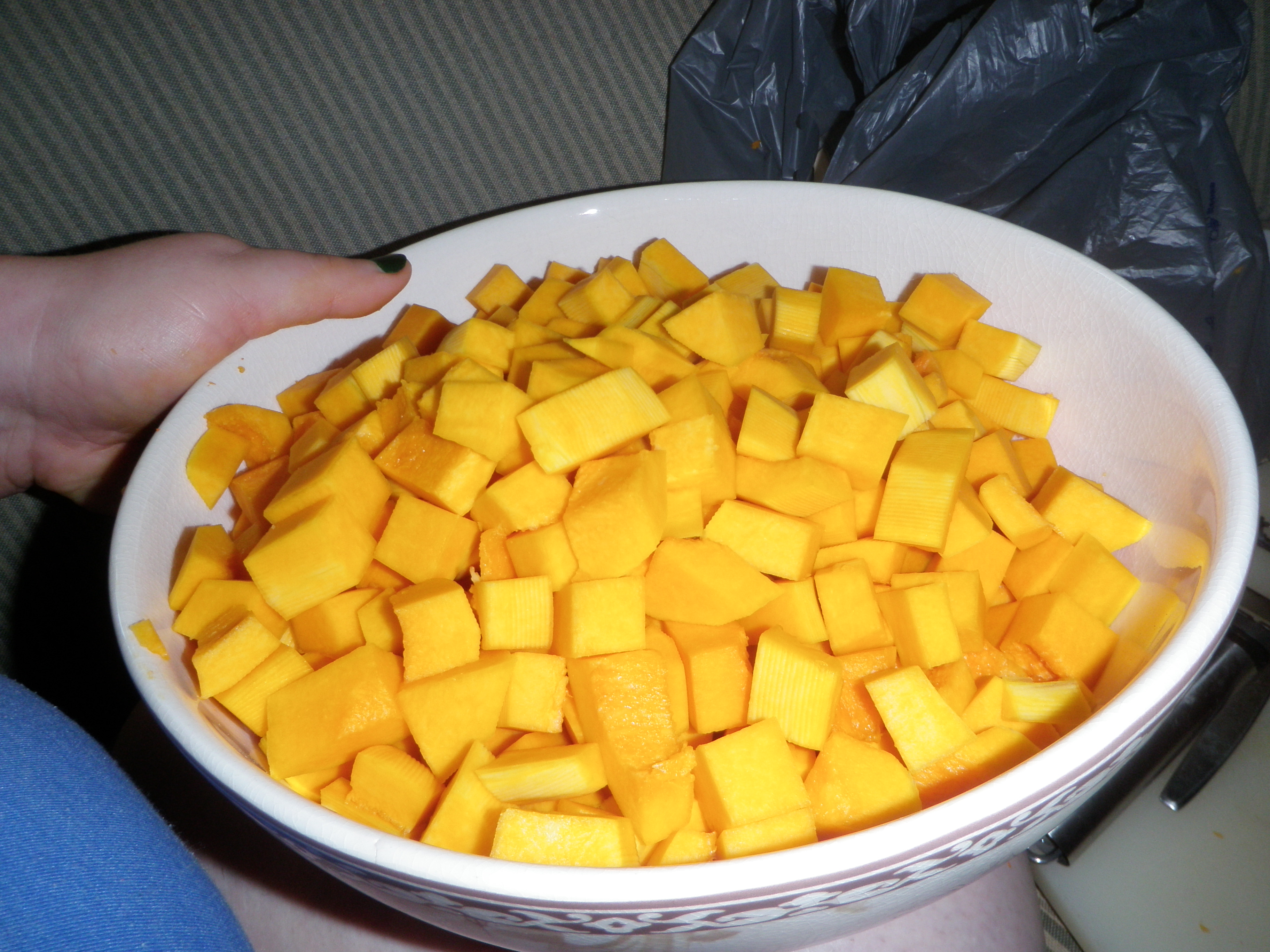
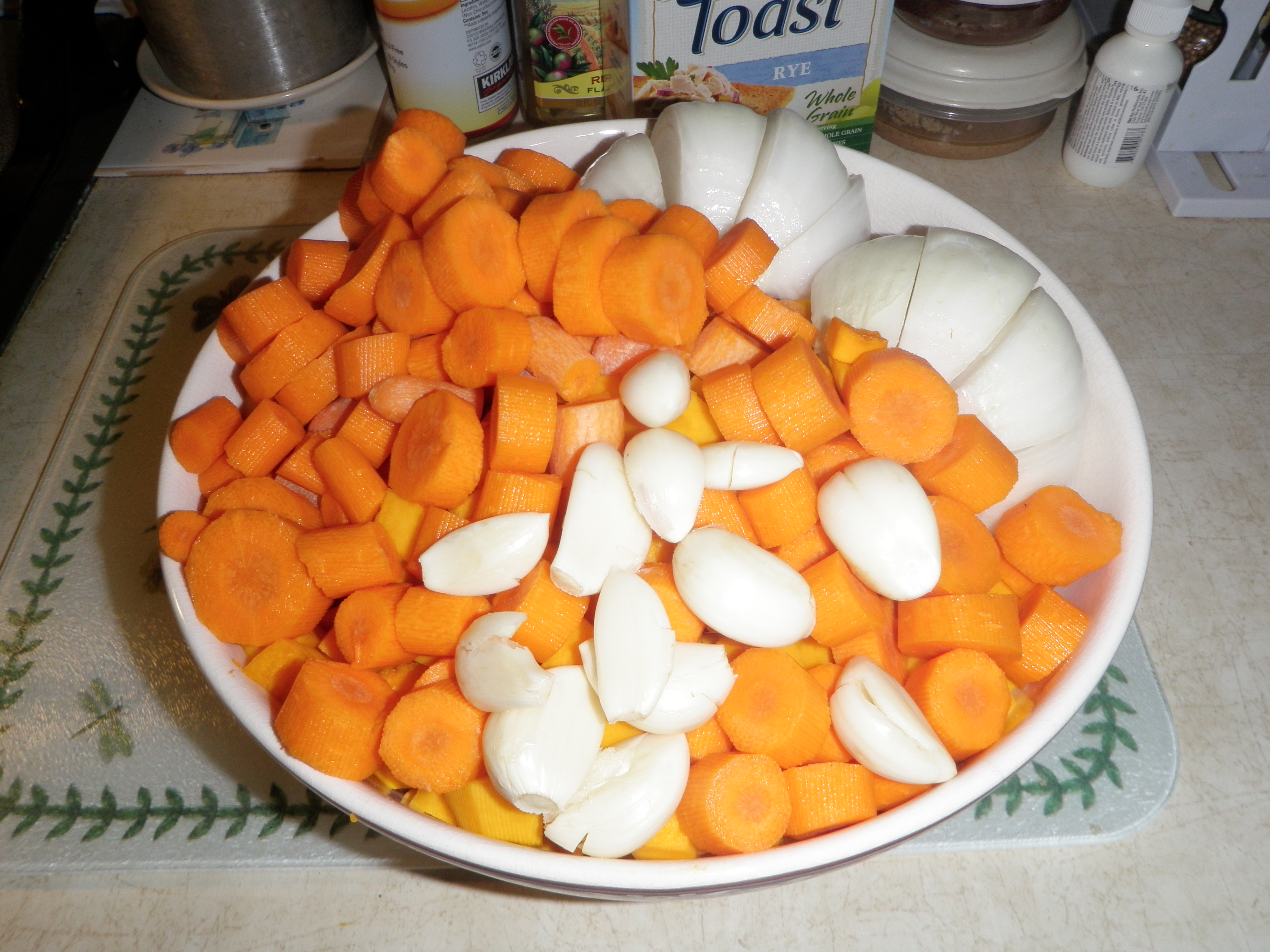
  • Butternut squash: peeled, seeded, and diced
  • Sweet onion: peeled and quartered
  • Carrots: cleaned and chopped
  • Garlic: one whole pod peeled (not one clove, but the whole pod of 10-12 cloves)
  • Stock or Cream: up to 8 cups, depending on your preference
  • Spices: Salt, Black Pepper, Ginger, Cumin, Coriander Seeds

Get all the veggies cleaned and cut. I usually do this while watching a movie, a method I “developed” from my days living in a tiny Brooklyn flat with no kitchen counters. If you’re using fresh ginger, peel, dice, and add that to the roasting mix.

Spread them all out on cookie sheets, making sure everything is in just one layer. Dust with salt, pepper, and spices; use as much or as little as you like. Roast at 400°F for 45 minutes. Turn off the oven and let them sit for another 15 minutes.

Dump all the veggies carefully into a large stock pot. Here’s where I’ve got to talk you through some options.

Option 1: Stock or Cream

The difference between a soup or a bisque is the use of stock or cream as your thinning or thickening agent. There are a few other options besides cream for a bisque, but that’s the traditional one. Vegans can choose vegetable stock or soy or rice milk. For the least flavor interference, use homemade vegetable or chicken stock. For a richer, velvety flavor, use beef stock. For the sweeter version of this soup, use ham or veal stock. And you can always use just plain water, especially if you are looking for a thicker consistency and not worried about having to use too much.

Option 2: Blending Method

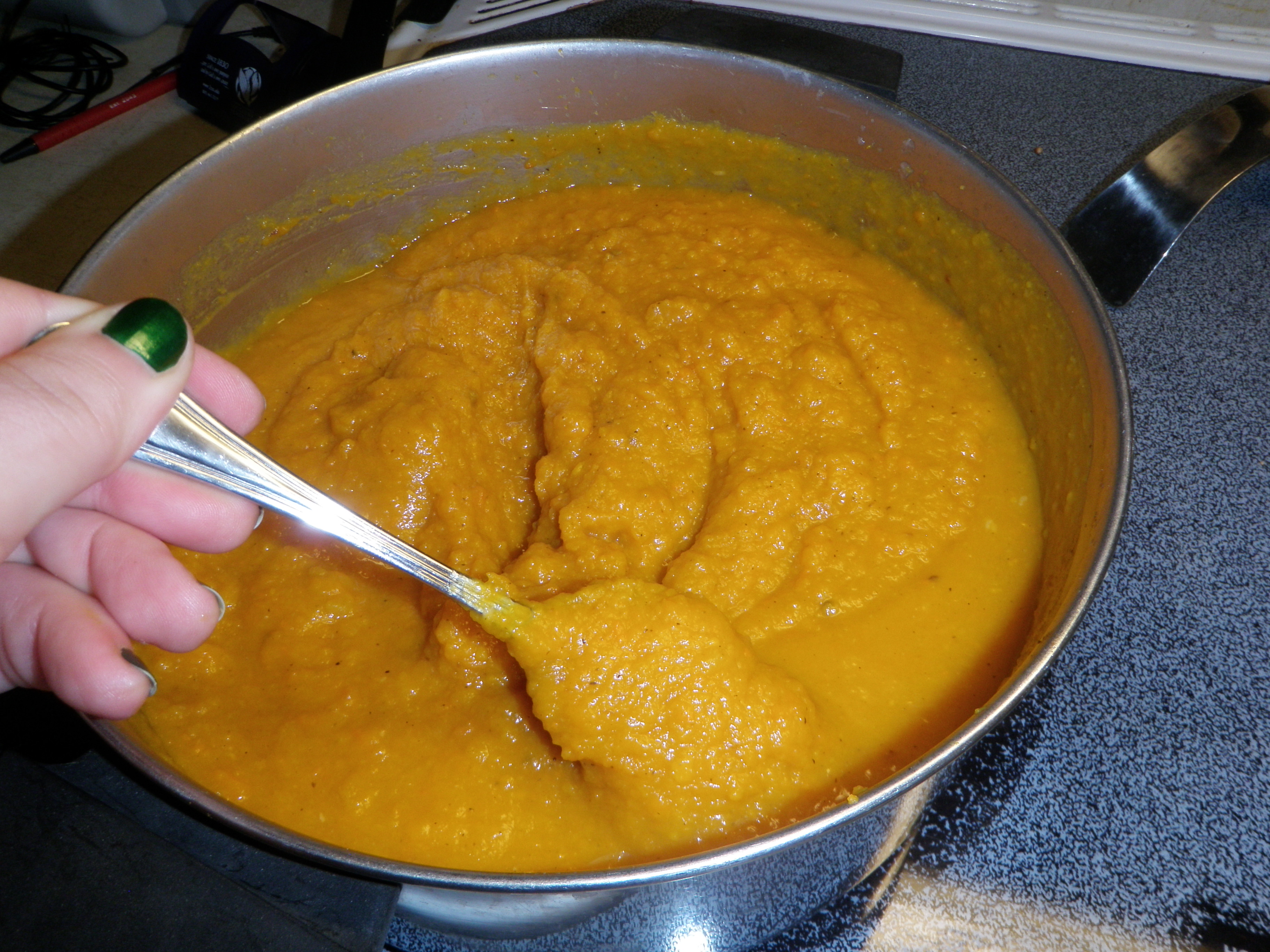
If you’ve watched chefs on cooking shows make soup, you’ve seen the two methods: blender or immersion wand. Both can achieve the same level of smoothness, but the traditional blender will get you there faster; just make sure the veggies have cooled to room temperature before using the traditional blender. Me, I like the convenience of the immersion wand because I can pretty much put all of the veggies in at one time and both see and feel the consistency as I’m blending; it offers a level of control that you don’t get with the traditional blender.

I like my soups with a strong “mouth feel,” which usually translates into thick or stew-like. I know it makes the blended soups look like baby food and/or baby poo, which, by the way, reminds me to tell you that this is exactly how to make your own baby food; studies show that children who eat the same food and same seasonings in their baby food as their parents have on their plates aren’t as picky during their formative years, making meal time much easier to deal with.

When my Mom insists on the sweeter version of this soup, it goes something like this:

  • Butternut squash
  • Carrots
  • Onion
  • Cream
  • Ginger, Nutmeg, Cinnamon, Brown Sugar (during blending)

This version comes out similar to sweet potato soufflé (aka sweet potato casserole) with Thanksgiving spices and sweetness. I just don’t happen to like that very much.

Note for Sarah: other ways I use butternut squash:

  • Oven or deep fried fries…similar to sweet potato fries
  • Winter Veggie Salad with b. squash, zucchini, carrots, onions (or mix with orzo or rice or risotto)
  • Mashed butternut squash
  • Ravioli or Lasagna filling
Posted in Being Healthy, Cooking, corn free, gluten free, nut free, soy free

Greek Penicillin–Greek Lemon Chicken Soup

There’s this new local soup and sandwich shop Ladles in Sweetgrass (the new Harris Teeter off Hwy 17 N) that serves up a fantastic Greek Lemon Chicken Soup…not tart, but fresh lemon flavor, hint of garlic, and just oh so comforting…even in the hot Lowcountry summer, which has gotten an early start.

But it’s not always convenient to go get it. And I needed something to make for my lunches this week that would make a little extra for one of our dinners. And…I’m a soup fanatic. Love it….hot or cold weather…but not really many cold soups.

So…what makes Greek Lemon Chicken Soup special? Well, to tell you the truth, it’s basically homemade chicken noodle soup with a special touch right at the end. Here’s how it goes.

Ingredients:

  • 6 large chicken breasts, skinless and boneless (about 4 lbs)
  • 64 oz (8 cups total) chicken broth (homemade is best; for corn free, use Pacific Organic Free Range Chicken Broth or Harris Teeter Organic Chicken Broth)
  • 4-6 large carrots, cleaned and roughly chopped
  • 1-2 large sweet onions, roughly chopped
  • 3-5 cloves of garlic, roughly chopped
  • 2-3 bay leaves
  • salt and pepper as desired
  • 2 cups Israeli couscous (little tiny pasta balls)–or 2 cups white rice which is more traditional and naturally gluten free
  • 3 eggs
  • juice and zest of 2 large lemons (alternate: 1 cup lemon juice)

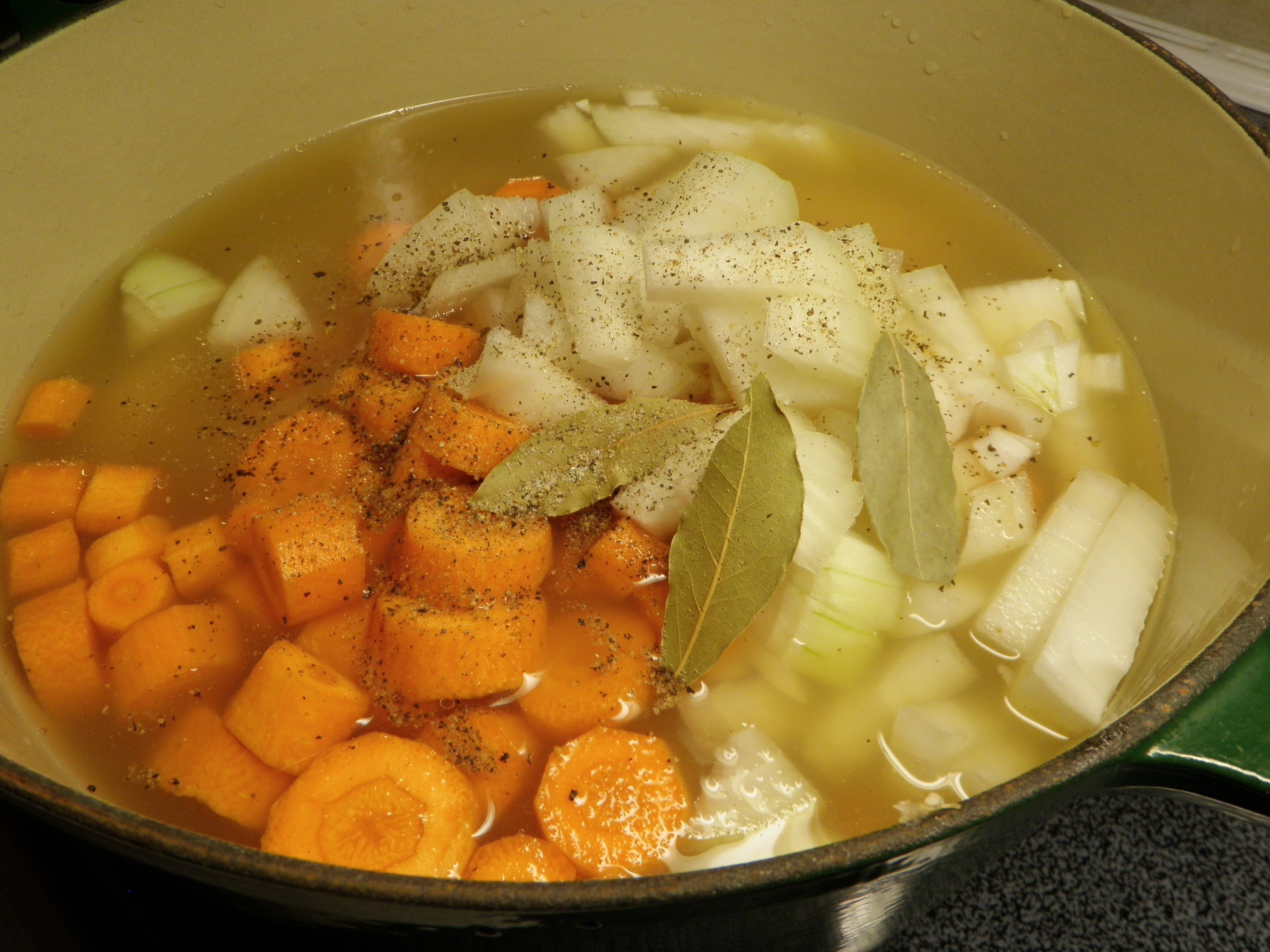
Place the chicken, carrots, onions, garlic, bay leaves, and salt and pepper in a stock pot; cover with 32 oz of chicken broth (about 4 cups). Bring to a boil, then cover and simmer for 30 minutes. This is to cook and flavor the chicken.

Remove the chicken and add the couscous and another 32 oz of chicken broth (about 4 cups). Cover and simmer while you shred (or chop) the chicken.

Add the chicken back in and stir well.

At this point, you have a fantastic and well-flavored Chicken Noodle Soup…and might very well choose to stop here.

Or…you can make and add the “Greek” part.

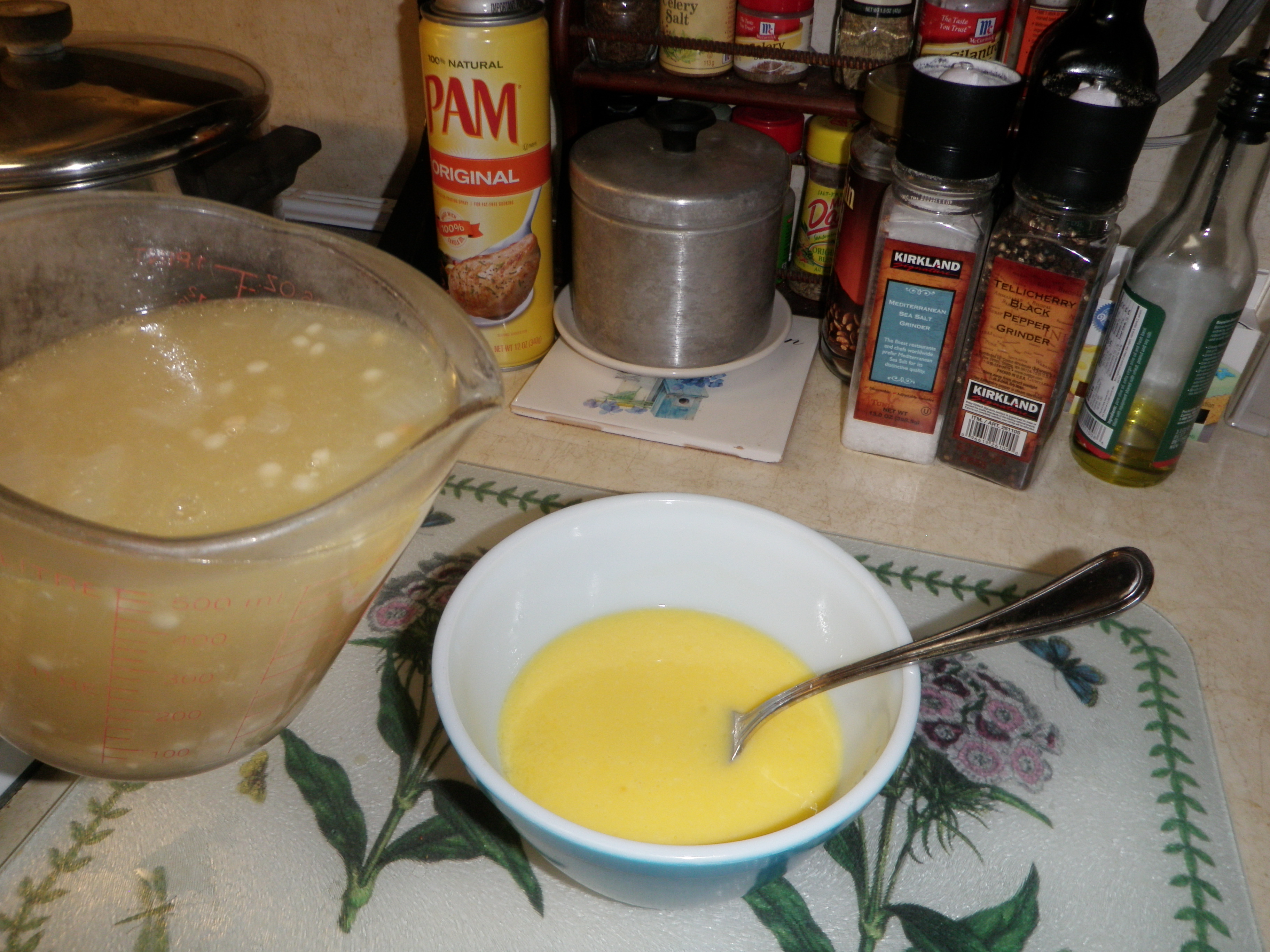
Whisk together three eggs and the juice and zest of two large lemons (about 1T zest and about 1/2 cup juice) in a large bowl. Be sure to use a large bowl, much larger than you think you need, because next you are going to add 2 cups of soup broth while whisking.

Get 2 cups of hot broth out of the soup pot; it’s okay if there’s some onion or couscous in it. I dip the broth out with a soup ladle and into a large measuring cup with a pour spout. This will come in really handy as I pour it into the egg mixture.

Now, take the measuring cup of broth in your left hand and your whisk in your right hand (or vice versa if you are left-handed).

Start whisking away gently.

Dribble the hot soup broth into the egg mixture very slowly, whisking the whole time.

It will take about five minutes, so be patient and DO NOT rush this  step. This is called “tempering” the eggs, warming them up without cooking them so that when you add the mixture to the soup, it will become naturally creamy from all of the proteins!

When you’ve incorporated all of your broth, take the soup off of the heat and add the mixture to the soup. Taste and see what you think.

If you want more lemony taste, add some more lemon juice.

NOTE: this recipe is based off of one posted by Whole Foods for Greek Lemon and Chicken Soup.

Posted in Being Healthy, Cooking

The Bliss of Homemade Popcorn

About five years ago, I took a chance and made popcorn in my own soup pot on a gas stove; you see, I was trimming the budget, and a bag of loose kernels is much cheaper than 24 bags of the microwave stuff (that’s an equivalent amount of popped corn).

And it couldn’t be simpler.

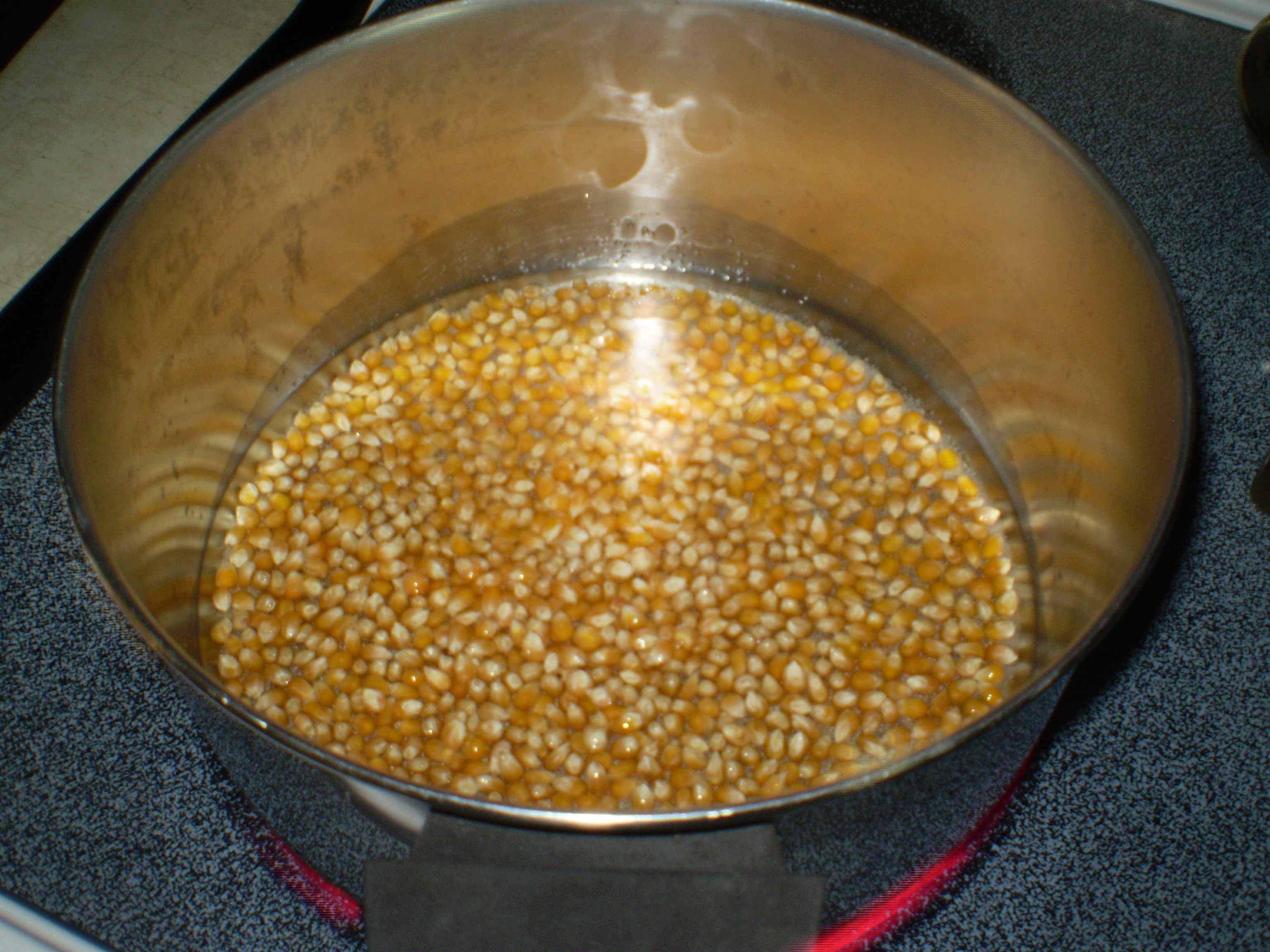
In your big soup pot (the lighter weight the better, if you have a choice), pour in cooking oil to cover the bottom of the pot, perhaps 1/8 inch. Dump in about half a cup of popcorn kernels and maybe 2 tablespoons of salt.

Then the secret: snap the lid on tight and don’t you dare open it up again until the popcorn has all popped.

Gently slide the pot back and forth over high heat. Don’t worry, be patient. You will definitely know when the action is heating up. You’ll hear the sizzle of the oil just a second or two before the first kernels pop. And they will pop up and hit the lid. Don’t be scared…and don’t you dare open the lid. Not only will you let out the heat and steam necessary to pop the corn, but you may lose an eye.

Keep sliding the pot back and forth as you hear the popping speed up. But listen carefully for the first signs of the slow down. When you can hear only one kernel at a time pop, it’s time to take the pot of the heat entirely.

Lift the lid carefully. You may get to enjoy the surprise of a few more kernels popping up and out of the top layer, which is a special delight for kids if you’ve got them helping with this!

Transfer the popcorn into a large bowl to let it cool off.

Now, if  you’ve used a good quality cooking oil, you will not need any flavoring. But…if you must, melt a whole stick of butter in the microwave and pour it over the popcorn; stir immediately but gently.

Other seasonings, which I recommend you add prior to popping:

  • 1/2 sugar or Splenda for sweet kettle corn
  • cayenne and chili powder for spicy
  • cumin for smokey
  • curry and sesame oil for earthy

Oh, and if you are on Weight Watchers and enjoy your 5 cups of 97% fat free microwave popcorn, just imagine what it’d be like to have delicately butter-flavored popcorn (same 5 cups) for 2 points…and feel so much more decadent!

Posted in Being Healthy, Cooking

Super-simple Sloppy Joes (and a tiny soapbox moment)

I have a love-hate relationship with sloppy joes. I do love the flavor, but there’s a soupiness threshold for me. Sure, it’s easy to buy a can of Manwich or some other pre-made sauce mix, but I think when you know what the sauce basic are, you just might want to try your own.

Brief Soapbox: The key reason I object to canned sloppy joe mix is that they all use corn syrup because they are tomato-based. I’m on a less-traditional bandwagon against corn syrup–and I don’t really care if it’s high- or low-fructose. First, why in God’s name does tomato sauce need sweetening? If the tomato is picked at the peak of ripeness, rather than forced into ripeness chemically, then they wouldn’t be bitter when cooked. Second, like milk allergies 15 years ago and nut allergies 10 years ago, the newest mass produce allergy is to corn; while research is too young to be conclusive, the prevailing medical, biological, and horticultural opinion is that this is because these products/industries are the first and largest to move into GMO production.

Okay, lesson over…for now.

Aside from that, don’t you want to be able to control the flavor of your sloppy joes! All they are is ground meat, tomato sauce, tomato paste, Worchestershire sauce, and seasonings. Sure, you can add other stuff like onions, peppers, tomato chunks, heat, etc., but that’s the basic recipe.

Ingredients (in the order they’ll go in the pan)

  • 1 lb ground meat–whatever you like, but tonight we have turkey
  • 1 clove garlic
  • 2 cups of tomato sauce (about 1 can)
  • 2T of tomato paste (often contains corn syrup so steer towards the international tubes of tomato paste like Amore)
  • 2T Worchestershire sauce (make your own GF/CF/SF with this recipe!)

After that, whatever you add is essentially your personalization of the basic sloppy joe:

  • green peppers
  • diced onion
  • crushed or diced tomato
  • chilis
  • bbq sauce
  • honey
  • any variety of spices

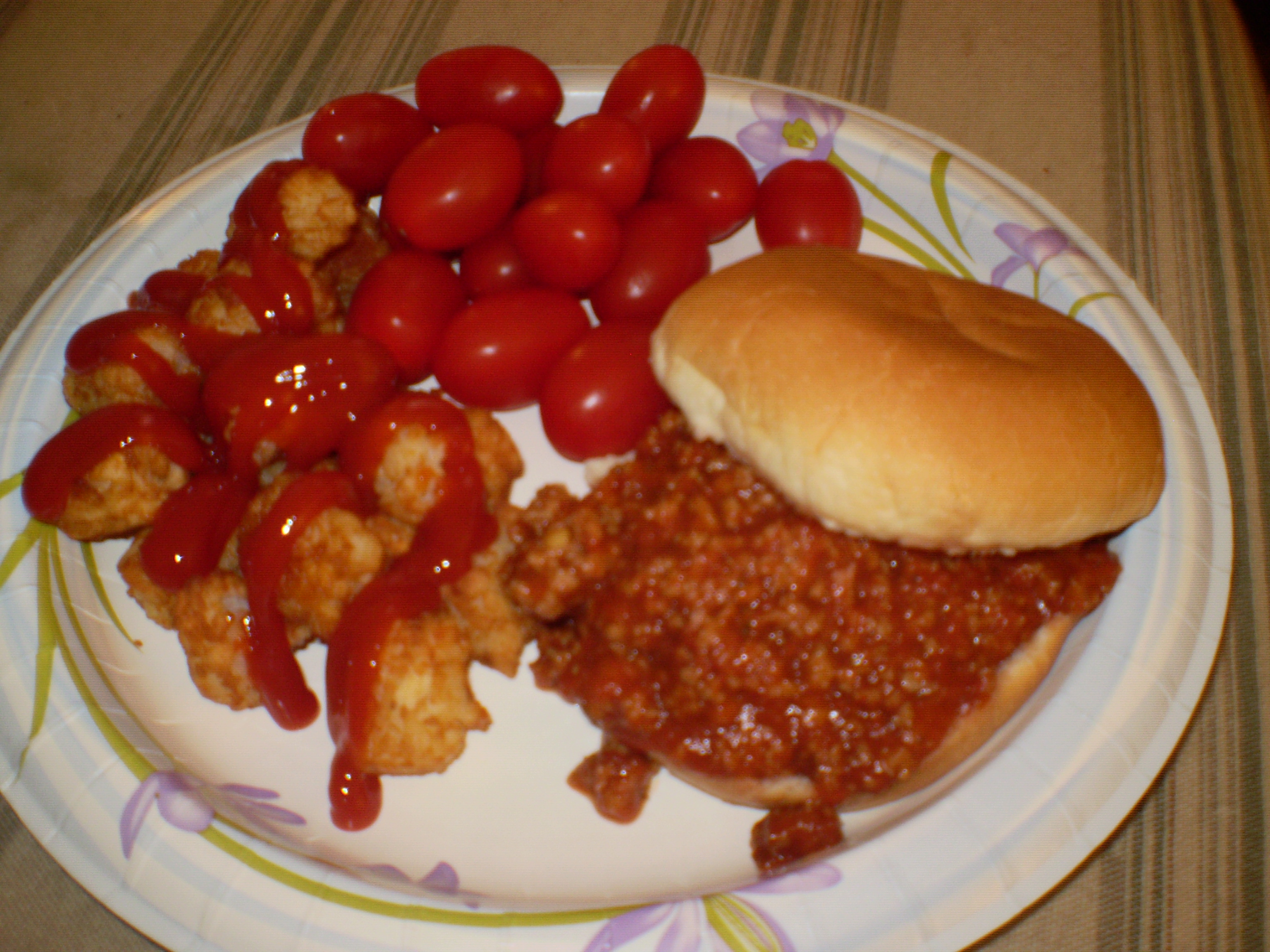
Serve this delicious concoction on a hamburger bun (traditional) or in a hot dog bun (practical). We are especially fond of eating them with a whole green onion. And tonight, our sloppy joes are paired with tater tots and fresh cooked green beans.

Posted in Being Healthy, Cooking

My Favorite Summer Pasta Salad

It’s summer, which for many means that all the best produce is in season, fresh, and readily available. Definitely true for all of the ingredients of my favorite summer salad.

It couldn’t be any simpler or take any less time or effort…and you’ll find it very versatile:

  • 1 package of your favorite shaped pasta, cooked, drained, and cooled (try an all-rice pasta for gluten free and corn free needs)
  • Equal volume of your favorite medley of fresh veggies (equal volume to the cooked pasta)
  • Seasoning: salt, pepper, thyme
  • Olive oil, about 1/4 cup for the whole salad
  • Lemon juice, or other acid like apple cider vinegar (to keep some of the veggies from turning brown)

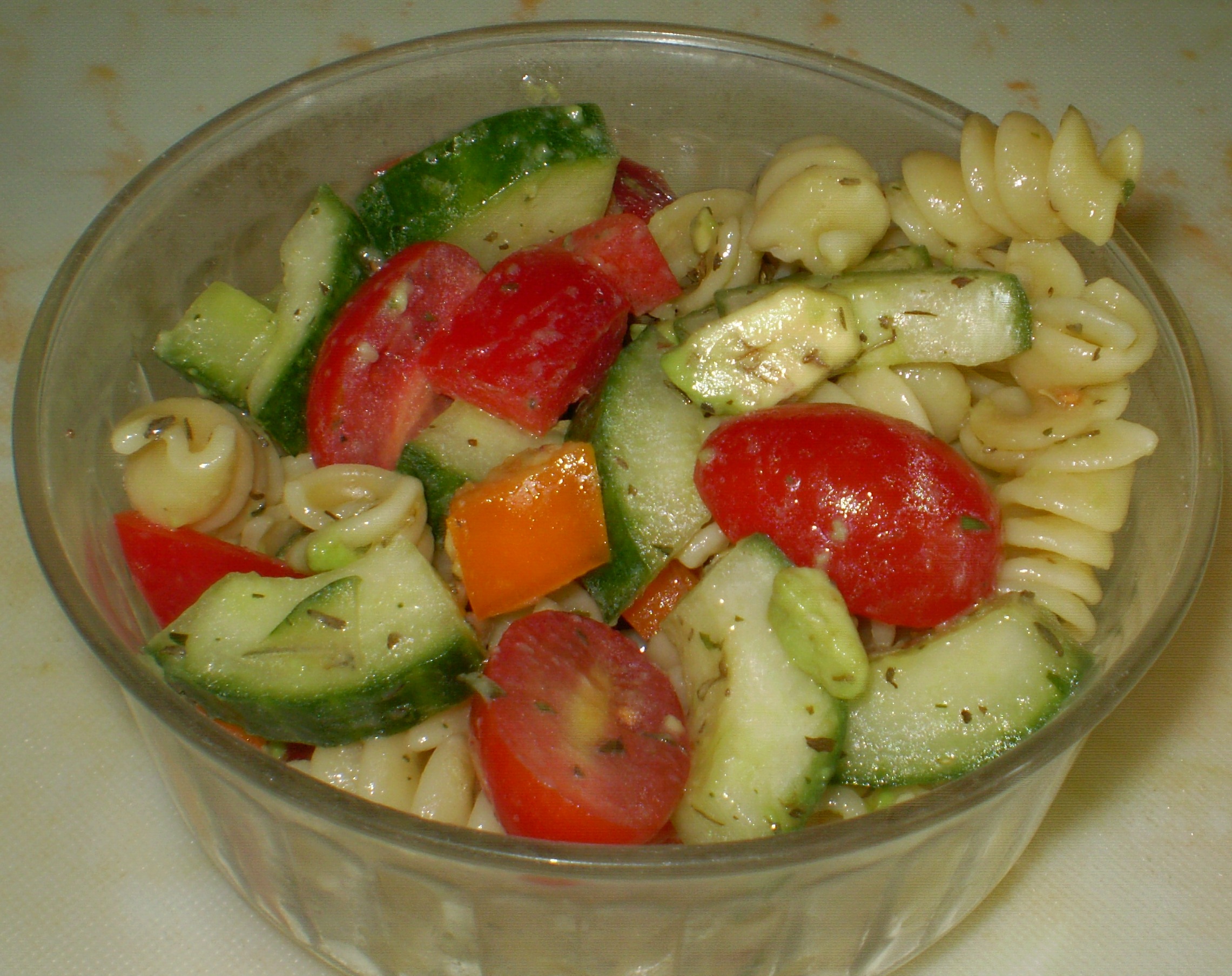
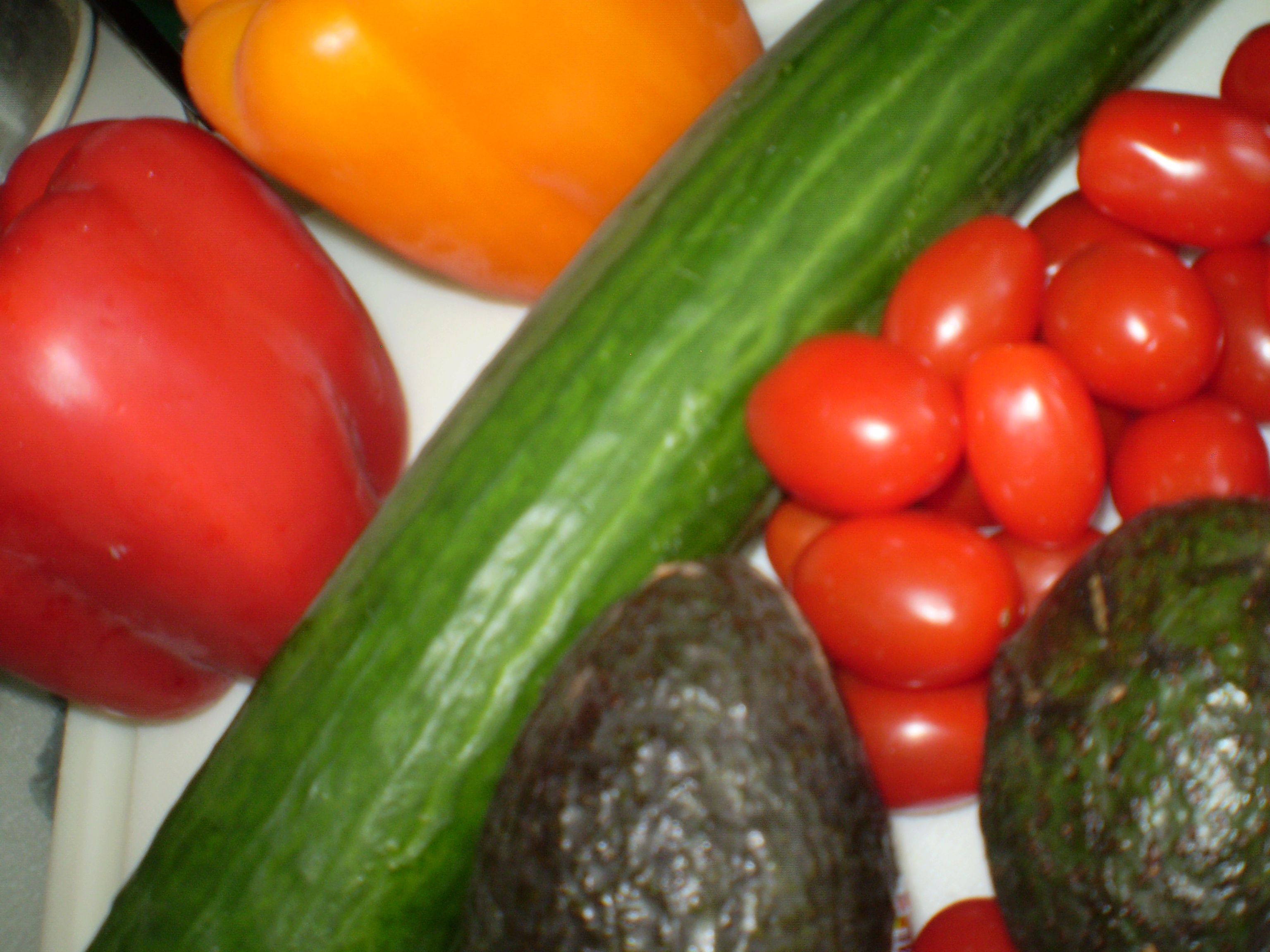
Me…this week I’ve paired rotelle (spiral) pasta with what I think of as my classic medley: 1 pint of grape tomatoes, 1 large hothouse cucumber (seeded), 1 orange bell pepper, 1 red bell pepper, and 2 small Hass avocados. I love how the avocados, regardless of how firm they are when you cut them, start to “melt” and become part of the dressing, keeping everything nice and lubricated without extra oil in the dressing! And I went with 2 T of herbs de provence to season everything nice and brightly…it’s the lavender flowers that I love best in the American version from Whole Foods.

Some alternative combos:

  • artichoke, orange, red onion with red wine vinegar
  • broccoli, cauliflower, shelled sugar snap peas with grapeseed oil

Sometimes I add a small bag of edamame, organic and non-GMO, if I don’t have any regular protein to go with it (either freshly made or leftover). But this week, I’ve cooked up several chicken breasts with herbs de provence.

The chicken, salad, and a banana will comprise my lunch for the week…all made in about 30 minutes.

But this salad is fantastic to make up on a Saturday or Sunday afternoon and just have in the fridge as a quick side or even late-night snack. With the sweet and crunchy veggies, it’s often an acceptable alternative to your palate’s oreo craving at 10:30 pm.

Finally, this is my regular go-to contribution to any summery potluck, especially if I know any vegetarians will be attending; I make a special point to let them know I will be bringing the salad and how I prepare it so they can be comfortable eating it. I’ve had several vegetarian friends attend a potluck for the first time because they knew there’d be something for them other than just what they brought. (In the winter, I do a mushroom risotto for my vegetarian friends.)