Posted in Content Marketing

Look Who’s Talking Cleaning in the Last Year

600600p3069EDNmainnew-contributors-300-x-250CBT new contributors among the best and brightest in the industry

New Contributors

In the past 12 months, we hav added 21 new contributors to our ever-growing list. We reach out every day to new experts in all aspects of both cleaning and business to ensure that you are getting the best information possible – all towards helping you run a healthy and profitable business.  They’re definitely worth another read!


  1. Deanna Arnold, human resources
  2. Bill Balek, ISSA legislative affairs
  3. Gloria Columna, cleaning franchise owner
  4. Ted Devine, insurance and risk management
  5. Kristen Hadeed, cleaning business owner
  6. Sam Hodges, business loans and financing
  7. Todd Horton, employee engagement
  8. Kris Koenig, cleaning business owner
  9. Robert Kravitz, public relations for commercial cleaning
  10. Benja Lane, cleaning business owner
  11. Kevin McGirl, sales strategist
  12. Debbie Murray, CETA director
  13. Clint Perez, marketing professional
  14. Will Reed, ISSA standards and certification
  15. Mervyn Rozet, marketing professional
  16. Eric Roudi, cleaning franchise owner
  17. Samantha Snider, cleaning business owner
  18. Bryan Summers, leadership assessment and training
  19. Amy Thomas, cleaning business owner
  20. Joe Walsh, cleaning business owner
  21. Robert Wendover, generational market researcher

Originally published April 21, 2015 at CleaningBusinessToday.com.

Posted in Content Marketing

Top 10 Stories from Our 2nd Year

600600p3069EDNmainCBT-Birthday-Cake-300-x-250From Success Profiles to Infographics to Breaking News, find out what caught the most eyes and spawned the most comments in the past year!

1. Success Stories: Kyle Walker, Real World Services

Youngest cleaning business owner launched his company at age 15 and hit his first million dollar revenue year at age. UPDATE: Since we last spoke with Kyle, he has entered the Mayoral race for Logan, OH; we believe Kyle would be the first cleaning business owner to occupy the office of Mayor while continuing to operate and grow his cleaning business.

2. Connections between Company Culture and Disruptive Innovation

Are you the company that’s throwing up brick walls in front of the people in touch with your customers – your employees? Your culture may be exposing your company to disruption and making you vulnerable.

3. Infographic: Benchmarking Your Pay Rates

Janitors and maids are the third largest occupation in the US. Are you paying enough compared to national averages?

4. Infection Control and Environmental Services Team Up in the Battle for Your Health

In order to tackle the spread of infectious disease in healthcare facilities, everyone must be on the same page. Hospitals and healthcare facilities can improve infection control when departments team up.

5. Homejoy Raises Rates, Drops out of Europe and Canada

Homejoy cites recruiting “the most dedicated, verified Cleaning Professionals in your area” and improvements in the customer experience as primary reasons for increase.

6. The Intersection of Client and Technician: Annual Software & User Experience Survey

From new mobile options to the addition of sales and marketing functions, new scheduling and user experience solutions are on the rise.

7. Success Stories: Diana Henley, Naturalcare Cleaning Service

Houston, TX-based cleaning company, founded on nature’s best cleaning and disinfecting power, branches into product development.

8. Adwords Then and Now: The Five-Year Inflation of Cost-per-Click

The number of total internet searches per year is estimated to be growing at about 10% a year. When it comes to Google AdWords, work smarter, not harder.

9. Success Stories: Lisa and Hamish Macqueen, Cleancorp 

Australian cleaning company jumps from $1M to $3.75M using online sales and service automation, wins Small Business ICON 2014.

10. The “Almost Perfect” Vacuum: Top Recommended Vacuums for Residential Cleaning Services

Top recommended vacuums for residential cleaning services – report & comparison chart

Originally published on April 10, 2015 at CleaningBusinessToday.com.
Posted in Content Marketing

Our 2nd Year in Review

600600p3069EDNmainCBT-Birthday-Cake-300-x-250Yay! CBT has grown in all kinds of ways!

As we begin Year 3 of leading edge news and solid, tested business discourse in our digital pages and on our website, we’ve taken some time this past month to reflect on how far we’ve come in 24 months before we look ahead at what we’ve got planned for the future!su


Top 10 Stories from April 2014 – March 2015

1. Success Stories: Kyle Walker, Real World Services

Youngest cleaning business owner launched his company at age 15 and hit his first million dollar revenue year at age. UPDATE: Since we last spoke with Kyle, he has entered the Mayoral race for Logan, OH; we believe Kyle would be the first cleaning business owner to occupy the office of Mayor while continuing to operate and grow his cleaning business.

2. Connections between Company Culture and Disruptive Innovation

Are you the company that’s throwing up brick walls in front of the people in touch with your customers – your employees? Your culture may be exposing your company to disruption and making you vulnerable.

3. Infographic: Benchmarking Your Pay Rates

Janitors and maids are the third largest occupation in the US. Are you paying enough compared to national averages?

4. Infection Control and Environmental Services Team Up in the Battle for Your Health

In order to tackle the spread of infectious disease in healthcare facilities, everyone must be on the same page. Hospitals and healthcare facilities can improve infection control when departments team up.

5. Homejoy Raises Rates, Drops out of Europe and Canada

Homejoy cites recruiting “the most dedicated, verified Cleaning Professionals in your area” and improvements in the customer experience as primary reasons for increase.

6. The Intersection of Client and Technician: Annual Software & User Experience Survey

From new mobile options to the addition of sales and marketing functions, new scheduling and user experience solutions are on the rise.

7. Success Stories: Diana Henley, Naturalcare Cleaning Service

Houston, TX-based cleaning company, founded on nature’s best cleaning and disinfecting power, branches into product development.

8. Adwords Then and Now: The Five-Year Inflation of Cost-per-Click

The number of total internet searches per year is estimated to be growing at about 10% a year. When it comes to Google AdWords, work smarter, not harder.

9. Success Stories: Lisa and Hamish Macqueen, Cleancorp 

Australian cleaning company jumps from $1M to $3.75M using online sales and service automation, wins Small Business ICON 2014.

10. The “Almost Perfect” Vacuum: Top Recommended Vacuums for Residential Cleaning Services

Top recommended vacuums for residential cleaning services – report & comparison chart 


Added Features

Directory

Last July, we officially launched our Directory with over 850 manufacturers and distributors listed. In addition to cleaning products and equipment, commonly found in similar directories, ours includes listings for the business services which enhance your long-term viability as a profitable enterprise. 


Events

Just last month, we launched our new Events page where our goal is to list as many industry events as possible:


  • Annual conventions
  • Regional meetings
  • Topic-focused weekend conferences
  • Free and Paid Webinars
  • Certification Classes and Programs
  • Executive and Management Programs

It’s a great way to find out what’s going on – all in one place!


More Product Information

Our first year, we conducted our first Field Service and Scheduling Survey and produced a report showing participants’ features side-by-side.


In our second year, we expanded our product survey reporting to deliver reports on a broader range of all-in-one and single-use software options and on vacuums recommended for professional use.

 
In our third year, we are asking YOU – our subscribers and the users of these products – to vote each month for the “Best of” Awards in a variety of categories: 

  • Cleaning Products and Equipment
  • Business Software and Systems
  • Marketing Services
  • Personnel Services
  • And MORE!


Disruptive Innovation Summit

Last fall during convention season, we partnered with ARCSI to host a unique event – the Disruptive Innovation Summit – a full day of education and discussion about some of the new ways of doing business that are challenging the classic small cleaning business model.


Speakers came from all over the world to help us dig into topics like:


  • The role of “disruptive innovation” in sharpening your competitive edge
  • The generation driving the rise of tech-enabled businesses
  • Technologies currently being used and created by cleaning businesses
  • And MORE!


And for a limited time, we are again making available.

Download FREE presenations from CBT's Disruptive Innovation Summit

New Contributors

In the past 12 months, we’ve added 21 new contributors to our ever-growing list. We reach out every day to new experts in all aspects of both cleaning and business to ensure that you are getting the best information possible – all towards helping you run a healthy and profitable business.  They’re definitely worth another read!


  1. Deanna Arnold, human resources
  2. Bill Balek, ISSA legislative affairs
  3. Gloria Columna, cleaning franchise owner
  4. Ted Devine, insurance and risk management
  5. Kristen Hadeed, cleaning business owner
  6. Sam Hodges, business loans and financing
  7. Todd Horton, employee engagement
  8. Kris Koenig, cleaning business owner
  9. Robert Kravitz, public relations for commercial cleaning
  10. Benja Lane, cleaning business owner
  11. Kevin McGirl, sales strategist
  12. Debbie Murray, CETA director
  13. Clint Perez, marketing professional
  14. Will Reed, ISSA standards and certification
  15. Mervyn Rozet, marketing professional
  16. Eric Roudi, cleaning franchise owner
  17. Samantha Snider, cleaning business owner
  18. Bryan Summers, leadership assessment and training
  19. Amy Thomas, cleaning business owner
  20. Joe Walsh, cleaning business owner
  21. Robert Wendover, generational market researcher

Originally published on April 1, 2015 at CleaningBusinessToday.com.

Posted in Content Marketing, Ghost Writer, Housekeeping

Put One Foot in Front of the Other: One Cleaner’s Path to Leadership

600600p3069EDNmainbenja-lane-300-x-250She didn’t set out to be a cleaner or even a cleaning business owner, but that’s where her path to leadership began.

We hear these things when we’re at the beginning of our business and think “they don’t apply to me” because I don’t have other cleaners yet or an office needing staff or enough towels to fight over who’s going to wash them for the next day. And it’s easy to say these ideas don’t apply to me. But I’m telling you they might not apply to you yet, so don’t close off your ears. You’ll get there. Just keep putting one foot in front of the other, and when you get there – and you will – it will all make sense.

CBT: When, why and how did you get your start in the cleaning industry and with Maid My Day Brevard?

BL: It was Jan 18, 2011 – the day before my birthday, in fact. I had just left my job of six years, and I didn’t have a job to go to the next day. I met my brother to celebrate that evening, and was excited about what I had planned: continuing to grow The Lane Solutions Group, a consulting firm focused on helping small businesses with their accounting, risk management, and HR compliance to improve their profitability, something I’d been doing for a number of years and planned to expand into my own business.

But I also knew that I wasn’t going to be able to replace my full income quickly enough to continue supporting my family, so I floated the idea of cleaning and asked my brother if he knew anyone who’d been looking for a cleaner. And the next day – my birthday, a friend of his called me and hired me. So I went to Walmart, bought some supplies and showed up at this house, ready to work but not having too much idea of what I was doing, which is probably why it took me two days to clean it. This first job included things I wouldn’t dream of doing now, like washing and pressing drapes (included in the fee) and hosing down a bathroom in bleach and then having to run away because my eyes were burning.

Within 30 days, I had accumulated enough regular clients to hire my first employee, who lucky for me had twenty years of experience in the cleaning business and whom I knew from my childhood; she was critical in helping me learn the field and technical side of the industry – on the job, literally. And within 90 days, I had enough regular clients to add a second employee to the cleaning business.

But even with this success, I wasn’t excited about the idea of a cleaning company. What I still wanted to do was business consulting and had, by that 90 day mark, a good 30 hours a week of work consulting. And consulting remained my primary focus for the first 18 months, with the cleaning business continuing to grow slowly but steadily simply through me networking through my professional channels through The Lane Solutions Group, Extreme Gleam’s parent company, and organic word-of-mouth. But only with the cleaning business revenue could I generate enough money to cover payroll and support my family. So we cleaned all day, and I consulted at night, making an 18-hour day my normal workday and maximizing my earning potential.

CBT: What was the turning point for you to make your cleaning company your focus, and more importantly your passion?

BL: I have to give that credit to a confluence of events because they all happened at the same time. It was a year after I started Extreme Gleam and I got a direct mail piece from ARCSI about the 2012 ELC in Orlando and the HCT class with it. And that spring I met Bruce Vance and David Kiser along with Tom Stewart and Derek Christian, who later became my first cleaning business coaches through the Foundations of Success program.

It was then, among the 100 or so companies gathered, that I realized I had a legitimate business and started to turn my attention to actually running a growing cleaning company. Within six months of ELC – by the convention in Chicago that same year – I had let go of the consulting business and took a leap to Extreme Gleam.

CBT: Now wasn’t your company first called Extreme Gleam? What prompted you to change the name and rebrand your company?

BL: As I mentioned, a cleaning business wasn’t my first choice. I had opened The Lane Solutions Group and had a good business following my traditional interest and skills in business, primarily for my cleaning clients. But almost two years into operating and growing the cleaning business offshoot, I liked it and I was good at it, but the original name/brand didn’t reflect the new commitment I was ready to make to focus fully on the cleaning business. So I began the process of rebranding by re-incorporating The Lane Solutions Group to Maid My Day Brevard and completed the brand conversion in January 2015.

Our new brand reflects the core values of the entire company and is more obviously customer-focused. But personally, the name change represented my commitment to my cleaning business, to being in this with both feet and my whole heart and head. To have all of my crops in one garden and to grow where I’m planted. And outwardly, it helped me to more easily and clearly say “this is what I do.”

CBT: Your first year or so in business was challenged by some unique situations. What was your source of motivation, inspiration, and plain ole energy to work through them?

BL: On a basic level, I think there are two primary motivators every business owner has: putting food on the table and making payroll. But beyond that, I’ve always received a feed of energy from the people I work with – my staff and technicians – the people to whom I am responsible for creating a sustainable job. The more customers I took on, the more people I hired, the more skin I had in the game.

My second most important source of motivation comes from my fellow cleaning business owners, primarily those I’ve met through ARCSI and the Foundations network, especially Alberto Oliveira. I can’t tell you how many times I’ve called him up to tell him “I’m fed up” or “I quit” or “I don’t want to do this anymore.” And I’d never have come back to the other end of that – back to my business – without him and others helping me.

CBT: Just a little more than a year after opening your doors, you had your first full day “out of the field” on May 6, 2014. How did you do it and how did that feel?

BL: When it comes down to it, stepping out of the field was a risk, a leap of faith even knowing things weren’t perfect. And it’s one I have to take again every time there’s a crisis – too many call outs, overbooked, quality problems, etc. – and it would be only too easy for me to just drive out there and do it myself.

But the fact is that my clients can’t afford – literally, in dollars – for me to personally perform the cleaning day-to-day or even on a special jobs basis. Why? Because there is a limited supply of “me,” so I have a responsibility to my customers to ensure they are getting the best value out of my time for the price they pay:

  • developing staff in a way where they could deliver quality service without me standing over their shoulder
  • building enough reoccurring business where I could financially sustain my move out of the field
  • raising rates to reflect the value and competitiveness of my services
  • systematically and consistently training new employees – and not just technicians
  • adopting a single line of chemicals to simplify the learning curve and improve training efficiency
  • training customers to learn and comply with service policies (so that there’s a chance of office staff actually getting things done efficiently)

The key thing for me to remember was that my being “out of the field” wasn’t permanent; it wasn’t a move where I had to say “I will never clean a toilet again.” Rather it was a paradigm shift, a new way of thinking about myself as a leader and the face of my brand.

highest compliment ever received
CBT:
You’re on the front lines in Florida as the state attempts to manage some employment-related changes, namely workers compensation, and you’ve fought hard to maintain a direct employment structure. What have been some of the challenges and how have you been able to be profitable as a direct employer?

BL: This is such a multi-step process: reincorporating while keeping the ratings we’d built as The Lane Solutions Group. There’s the standard refiling of legal and tax paperwork, but what ultimately held up the launch of our rebranding publicly was the process and waiting period we had to endure to keep our workers compensation rating. We’d earned strong credibility by not having any claims against us and by paying on time.

And when I sat down with my agent about making this change, that’s when I learned how challenging the workers compensation market is for employers in the state of Florida. The likelihood of getting a new policy for the new corporation would be incredibly difficult and might even force me into leasing employees from a staffing agency until we could get coverage. But I could continue with my current corporation and policy until that policy had seasoned sufficiently to allow me to apply to the state of Florida to transfer the policy with its ratings to the new corporation.

The key to this whole process came down to one thing: developing a relationship with my insurance carrier. And before making any major changes, talk to them; that’s what your agent is there for. Use them as a consultant for your business; after all, that’s a big part of what you’re paying them for.

CBT: As you look forward to your fourth full year in business, what goals have you accomplished and what new ones are you looking forward to going after soon?

BL: To date, we’ve been in a sustained growth mode, relying on referrals and organic word of mouth to gain new clients; and that’s worked, netting us 65% growth in 2013. With our rebranding and my move into the office, I’m finally ready to open the valve on a real, strategically developed marketing program to raise brand awareness and generate leads for the business.

As I’ve put the finishing touches on a streamlined hiring and training system, we are today just slightly overstaffed and ready to turn on the marketing and get in the game, looking to field a third team full-time and a fourth team in development by the end of the year.

In some ways, it feels like we’re opening our doors for the first time – again.

Originally published March 5, 2015 at CleaningBusinessToday.com.
Posted in Business Articles, Content Marketing, Housekeeping

2013 Cleaning Convention Recap: Networking, Synergy, and Landmarks

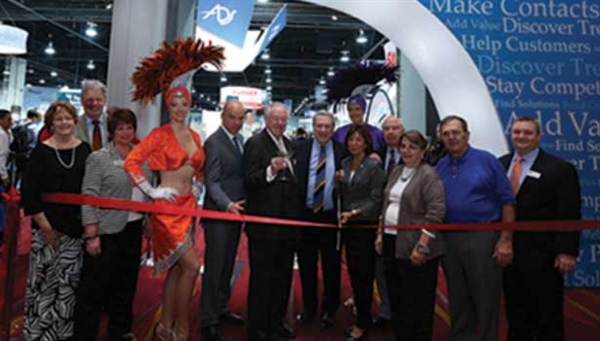
600600p3069EDNmain705ribbon-cutting-615-x-350What you gain attending the annual cleaning convention is priceless. Taken together with the four associations who gathered in Las Vegas in November, the industry trends, association initiatives and major awards were uniquely uniting for the cleaning industry.

If ever there was proof that the cleaning industry is strong, large, and growing, the evidence could be found at the 2013 trade show and conventions in Las Vegas. Attendance records were broken, vendor participation was at an all-time high, and annual awards honored unsung heroes.

Centered around ISSA/INTERCLEAN 2013 were its three co-located conventions by IEHA – the International Executive Housekeepers Association, ARCSI – the Association of Residential Cleaning Services International, and BSCAI – the Building Service Contractors Association International. With each of these associations reporting record attendance, it’s no wonder the main trade show was packed for two-and-a-half days.

Trends in the Cleaning Industry
Within our ever-evolving industry, change is inevitable, but it’s the changes that catch on with the customers who demand quality and specialty service as well as the businesses who work together up and down the supply chain who really define the trends and challenges facing the cleaning industry at large.

Sustainability
The “green” movement has had its day and continues to enjoy a specialty following, but the lasting trend from that effort is one of sustainability: the balance between achieving our clean goals, rendering minimal negative impact on the natural environment, and operating a successful and profitable business.

Toward that end, many manufacturers launched or featured low-impact salt-based cleaner/sanitizers, including some designed for use by residential cleaning companies. The number of steam-based cleaning and disinfecting options is growing, and the availability of cleaning enzymes is expanding.

Aging Building Maintenance
More than once, the challenges of servicing the “aging building market” was a topic of presentation and discussion. For many years, cleaning was cleaning, with no standard body of knowledge or skills established. With construction remaining slow, rents rising, and businesses moving to older buildings, BSCs find themselves faced with a well-worn building where no amount of removing soil can make things shine the way they used to.

BSCs are faced with the conundrum of feeding into the “pretty and shiny = clean” consumer mentality or potentially losing out on contracts when maintenance or even renovation is the best choice for achieving the consumers’ end-goal appearance. For this reason, the multiple-solution bid is becoming more common, providing the opportunity to place the best option (whatever that may be) in a value perspective.

Mobile Business Solutions 
The number of online and mobile business solutions grows every year, so it was only a matter of time before technology-based solutions made their way into the cleaning industry. Mobile business solutions are major investments that empower cost-cutting savings in operations and support services. They make a huge, positive difference in margins. Online quoting tools and automated sales systems help land new clients. Customer satisfaction and survey tools help retain great clients. These mobile solutions also enhance efficiency in scheduling, creating work orders and dispatching field staff.

When you’re evaluating your existing solutions or looking for a new solution, be sure to check for mobile and cloud interfaces with coordinating products, including ISSA Innovation Award winner CleanTelligent Software for their mobile surveys and work orders. And be sure to check out our June article, which compares options for scheduling and field services software.

Trends Among Associations
Since 1998, ISSA has shared the annual ISSA/INTERCLEAN Show with at least one, and now three, co-located associations. Together they represent “customers” of the various manufacturer and distributor groups who comprise ISSA’s primary membership. And in those 15 years, IEHA, BSCAI and ARCSI have worked together with ISSA to empower growth within the industry at large and within their own constituencies.

IEHA executive director Beth Risinger commented that about 20 years ago, when she first reached out to ISSA, the leadership of other associations was skeptical of initiating a relationship between ISSA and a group considered its customers. But today, she and the leadership of ARCSI and BSCAI have forged strong friendships and an enormous business network. This strengthens the member companies of each group.

BSCAI opened its convention with a unique panel including leadership from BOMA – Building Owners and Managers Association, IREM – Institute of Real Estate Management, and IFMA – International Facility Management Association, along with the BSCAI President. Though the panel was focused on addressing important questions for building service contractors (BSCs), the conversation and its residual value spans the industry.

Our common cause is the delivery of exceptional products and services to the occupants of the spaces we build, manage, clean, and maintain. When we enter into business arrangements with this knowledge, knowing the mission and recognizing the value of our respective associations, we better benefit each other and ourselves. Specifically, we best benefit our end users by:

  • Cooperating and collaborating with members of related industry associations
  • Sharing mutually beneficial resources – bodies of knowledge, educational programs, and certifications
  • Engaging in informed supply chain relationships, which provides the best possible experience for end users
LANDMARK AWARDS

IEHA – ISSA Lifetime Achievement Award
Beth Risinger

beth-risinger-150-x-200This year’s Lifetime Achievement Award marks the 15th anniversary of the landmark and highly-successful partnership between ISSA and IEHA. And for the first time, IEHA participated in the selection process and presentation of the award. As the executive director of IEHA, Beth Risinger has grown that organization to the largest of the three association partners to ISSA. Together with ISSA, she has championed education, certification programs and the development of many leadership tools. She has authored Kip the Koala, the first coloring book for children about cleaning.

BSCAI Industry Service Award and ISSA Industry Distinguished Service Awards
Varsity Facility Services

Don-Aslett-and-Arlo-LukeTwo of the industry’s top service awards were granted this year to Founder Don Aslett and Board of Directors Chairman Arlo Luke, both of Varsity Facility Services. These two college friends started Varsity Facility Services over 55 years ago and have grown it into a powerhouse.

The company has interests in every area of the cleaning industry and has achieved several milestones. It was the first company to become CIMS Certified with Honors. In addition, Don Aslett is the founder and curator of the Museum of Clean, an historical collection of cleaning instruments and advertisements which serve as a testament to the role of cleaning in the evolution of society. In his award comments, Don asserted that, though “we’re still invisible” to many, he can always tell a professional cleaner by the sagging pants, where their keys have pulled them out of shape.

BSCAI Employee of the Year Award
Patrick Morgan

It’s not often that the heroes of the cleaning industry are known outside of their association, let alone outside of the company for which they work. But thanks to the power of our connected world, the tale of Patrick Morgan of Sunshine Cleaning Systems went viral in early 2013. So on November 20th, when Larry Calufetti, President of Sunshine Cleaning Systems, introduced Patrick for the BSCAI Employee of the Year Award, sponsored by Hillyard, Patrick was known, recognized, and appreciated for the example he sets for members of the industry, and also for consumers.

ARCSI President’s Award
Rachel Farquer, My Maid Service

rachael-150-x-200In its closing President’s Reception, ARCSI honored Rachel Farquer of My Maid Service, who in 2014 will become the majority owner and general manager of the company’s newest office in Dayton, OH. Having started off as an average cleaning technician, Rachel’s true talent in leadership and management was revealed when she transitioned to office work in the later months of a pregnancy. Today, at just 24 years old, Rachel is the first President’s Award recipient to have risen through the ranks of her employer’s company to become a majority owner.  Read Derek Christian’s nomination letter.

Through awards and the occasional viral video, members and companies in our industry continually advance the notion that “clean is a condition,” in the words of Don Aslett. With far more than just the four industry associations which convene with ISSA/INTERCLEAN each year, it is essential to remember that all are aiming toward the same ultimate goal: a strong and growing cleaning industry perceived as valuable by our society.

Originally published on December 2, 2013 at CleaningBusinessToday.com.
Posted in Business Articles, Content Marketing, Small Business Tips

The Family Business: They Have to Really Want It for the Dream to Become Reality

600600p3069EDNmain1157Anago-3-shot-300-x-250Father and son navigate the life-long process of succession planning.

When Dave Povlitz filed his business corporation paperwork in 1989, he was already thinking about who would take over the company when he was ready to retire. Though that day was 30 or so years in the future, he knew that it mattered even then – in the beginning – if he wanted to ensure the continued success of his legacy at Anago Cleaning Systems.

And like many business owners with a family, Dave dreamed of one day watching one of his children – daughter Lisa or son Adam – grow to love his business as much as he did and want to lead its continued growth. But as much as he dreamed of this family legacy, Dave also knew that leading his business had to be something that the next leader – family or not – valued, believed in, and wanted.

To build his company into something both successful and sustainable, Dave established Seven Unifying Principles to guide the company in setting overarching strategy and addressing day-to-day challenges. And it’s these seven principles, or core values, that have guided his approach to succession planning.

1) Believe in People
“You’re not working for me,” Dave told Adam when he graduated from college with a degree in finance. “You need to go out and work and learn something.”

The leader of a company needs to have enviable attention to detail, intricate financial expertise, and great operational/managerial skills. S/he must be a self-starter and a person who is continually creating ways to do everything better. This person is your biggest sales person and brand advocate, the most human and approachable member of your company. And above all, the company CEO must have a great heart.

“We are here for our franchisees’ success,” says Dave. “That’s our motto.” And that’s where Adam started with Anago after he’d worked in corporate America – as a regional franchise development manager helping franchisees get set up and troubleshoot challenges.

2) Have Personal and Professional Integrity
“The difference between good and excellent is a person’s attention to detail while having empathy.”

One of the hardest parts of creating a family legacy through natural succession is avoiding even the appearance of nepotism. When a business owner brings family members directly into a leadership position, they often inherit a target on their backs at the same time. It’s more than just important, it’s critical to ensure that anyone being promoted into a leadership position has a solid foundation in the inner workings of the company.

Before college, Adam had spent some time telemarketing for the Anago franchisees by day and cleaning a daycare center by night. His sister Lisa started out as a bookkeeper while she went to college. Dave worked hard to make sure that both of his children could speak to every part of the business before considering them – or anyone else – for promotion.

3) Give People the Opportunity for Advancement
“No matter what I did, I was only going to ever be one tiny little cog,” explained Adam about what made him start searching for more than the standard career in finance.

When a leader starts to think about succession, it’s tempting to try to think of finding a person who’s ready to just step right in. But the reality is that very few people like that exist – someone with just the right skills, perspective, and knowledge to step out of an existing job and into the CEO shoes. That’s why it’s vital that a company have and support an employee structure that not only allows for a few to grow into new levels of responsibility, but that actively promotes advancement.

The Master franchise structure that Anago uses does exactly that. It put Adam and Lisa through their paces and helped them grow into the leaders they are today. Adam is the Executive Vice President, having worked his way from cleaning technician and telemarketer to regional franchise development manager to financial officer to the executive team leader. Lisa is the Vice President of Internal Operations, having started as one of the bookkeepers, and now oversees 20 administrative staff responsible for telemarketing, regulatory compliance, human resources, and more.

4) Promote Training and Education
“The primary barrier to entry in the cleaning industry is not cleaning, but the other stuff,” claims Adam. “There are smarter ways to do business, and that’s what we teach our franchisees.”

As important as the formal and on-the-job training is that top-level executive candidates bring to the leadership of the company, it’s just as critical to consider the role of all levels of management within the company in two key areas:
– Their need to continue learning and be growing contributors to the existing and future leadership.
– Their ability to impart both skill training and institutional knowledge to other leaders-in-training.

Dave made sure that both Lisa and Adam would value continuous training and education by having them learn the business from lower management roles. They needed both job skill training and company culture experience.

5) Reserve the Right to Make Mistakes
“Move slowly. Analyze the details of a person’s career,” explains Dave. “Try to find someone from within the organization that has grown up while experiencing the ups and downs and pitfalls of growth. It takes a lot of negotiating in every aspect of life to be a great CEO.”

Those mistakes are an important part of evaluating a person’s ability to lead because mistakes expose a person’s ability to exhibit several of the core values. In fact, a question about a mistake is one of the best questions any interviewer can ask a candidate for any position. The value to the person making a mistake is in recognizing the need for change. The value to the interviewer is the glimpse into the candidate’s reaction to change and ability to see and maximize opportunities.

That’s another reason Dave insisted Adam and Lisa both work from deep within the company to earn their current leadership roles: to ensure that they had ample opportunity to make and learn from their mistakes as part of growing into excellent leaders.

6) Provide a Sense of Achievement and Enjoyment
“The best ideas for development come from our franchisees,” says Adam. And as he’s worked with franchisees, Adam has come to value the growth driven by their knowledge.

The greatest sense of self comes with being encouraged to tell a story about what you go through to arrive at a point of resolution. In other words, when you describe a challenge and are also able to explain how you developed a solution. And to do that, you need someone to listen to your story. That’s one of the ways that the success process can bring the excitement of change and inspiration into a company.

Adam has made it an essential part of his role to listen to the company’s franchisees and support their solutions and recommendations for global development.

7) Manage with Goals
“We don’t want to be your father’s cleaning company,” laughs Adam as he starts to list some of the ways the same old goal of growing the company looks so different in a technology-enabled world.

Business growth is driven by a company’s ability to continually differentiate itself from its competitors, and today a company’s use of technology to create an outstanding user experience is critical to meeting that expectation. More business owners are emerging from the millennial generation in their 20s-30s; they are the rising decision makers, and they’ve been conducting business in an app-based, automated, instant information and accountability world.

As the Executive Vice President and CEO-elect, Adam is already moving the company in some new directions with that growth goal:
– Developing tablet-based software to support easier client interactions and improve technician job delivery and unit franchise operations.
– Expanding the franchise both nationally and internationally, empowered by the ability to use technology to bridge many international challenges.

Passing On the Family Business
With Adam poised to advance to CEO upon Dave’s retirement, both had a few additional cautions for business owners who want nothing more than to see their family join and grow their dream into a true family business:

You – the business owner – have to make sure that son or daughter, sister or brother really want to work in the industry and work hard to develop a full set of leadership skills – even the uncomfortable ones.
Be careful to compartmentalize emotions when interacting with family members – both at the office and at home.
Minimize the appearance of a family clique within or above the full leadership team; Dave, Adam and Lisa limit their family time to one lunch a week.

Power is taken, not given, even within families; be careful to avoid “taking over” before the current CEO is ready to hand over the reins.

Anago Cleaning Systems, led by Chairman and Founder David Povlitz, is enjoying its top growth year ever and will celebrate its 25th Anniversary in 2014. Anago encourages the growth of family-run businesses; in fact, its most successful Master Franchisees are those with a family element in the business dynamic. David has seen the rewards of working at his company with his son Adam, the Executive Vice President, who plays a growing role on the Executive Team of the company, responsible for operations, Master training, and management of vendor relationships.

CeCe Mikell is the Editorial Director for Cleaning Business Today, coming to the cleaning industry from a 15-year career as a college professor of communication and business. She also works with several cleaning business owners on business development projects.

Originally published on October 27, 2014 at CleaningBusinessToday.com.

Posted in Business Articles, Small Business Tips

Post, Share, and Comment at the Right Time Each Day

600600p3069EDNmain1112social-times-300-x-250Scheduling your social media checks and posts around high activity points can improve your lead generation rates.

Knowing WHEN to post on each different social media and networking site is just as important as WHAT you post. Here’s a quick guide based on research from SendSocialMedia that will help you

  1. schedule your live social activity time each day – minimizing wasted time and maximizing “the moment”
  2. schedule your auto-posts directly or through a social media management platform – allowing you to set up posts for days, weeks, or months ahead of time!

Consider scheduling 30 minutes in the morning and 30 minutes in the afternoon to check on your social activity.

And don’t forget to follow Cleaning Business Today where you like to get your updates!


Originally published on August 19, 2014 at CleaningBusinessToday.com.

Posted in Business Articles, Ghost Writer, Housekeeping, Small Business Tips

Boosting Your Local Point of Differentiation: Champion a Charity through Every Part of Your Business

600600p3069EDNmain1027flag-and-ribbon-615-x-350Show-and-tell isn’t just for Kindergarten. Put your community ties on display and into action.

One of the most under-utilized marketing strategies by any company is highlighting its community service efforts. And with the continued growth of cleaning franchises and national cleaning referral services, a traditional small cleaning business can really maximize that “locally owned and operated” point of differentiation by partnering with local and national community-focused organizations.

The cleaning industry is particularly lucky to have a number of organizations around the US and Canada to make donating cleaning services easy:

Cleaning for a Reason (United States)
Cleaning for Cancer Patients (Canada)
Cleaning for Heroes (United States)
ComforTree (NJ)
Cleaning Angels USA (NY & DE)

Many business owners are finding that their affiliation with a local charity or cleaning-related charity helps their brand reputation, especially for those cleaning companies highlighting their local connections. In addition to the initial press releases when a cleaning company partners with a charity, there are a number of ways to incorporate the affiliation and even small donations into more common elements of your marketing and customer service plans.

American Maid owner Liz Trotter offers both staff and clients a way to join efforts to “Give Back Through Community Outreach.” She rotates through different local and national organizations and invites clients to become involved in her company’s efforts each month.

Joe Walsh of Green Clean Maine and Gemma Beylouny of Rejoice Maids both encourage community participation by making a donation to a client’s charity of choice when the client posts a review on one of four popular review sites. Click the thumbnail images to enlarge.

For small businesses – cleaning or other home services – making that “locally owned and operated” point of differentiation is a tough one to display. Highlighting your community outreach spirit and activities through your business is a great way to show the trust your current clients have in you and to catch the attention of those who are looking for your services.

Originally published July 21, 2014 at CleaningBusinessToday.com.
Posted in Business Articles, Housekeeping, Small Business Tips

The Intersection of Client and Technician: Annual Software & User Experience Survey

600600p3069EDNmain888woman-with-ipad-615-x-350From new mobile options to the addition of sales and marketing functions, new scheduling and user experience solutions are on the rise.

In the past 12 months, since our first field services and scheduling software comparison report, the #1 change in the competitive field is that most of the new options are being designed by current or former cleaning business owners. So what does this say about what cleaning business owners need for improving the efficiency and efficacy of their operational procedures?

In this 2014 User Experience Survey Report, two new software options join MaidEasy Software, all of which are designed by cleaning business owners and designed specifically for use in operating a cleaning business:

MaidEasy Software – 1999
MaidSuite – 2014
ZenMaid – 2013

CBT welcomes a growing group of more general home services software providers. While available and accommodating to the needs of home services other than cleaning, two of the most commonly adopted systems – ServiceCEO and Thoughtful Systems – are joined by emerging service providers, many of which fill open system niches.
CompassWave – 2010
Jobber – 2010
Launch 27 – 2013
PocketSuite – 2013
ServiceCEO by Marathon Data – 1984
ServiceProz – 2009
Thoughtful Systems – 1985

More than 50 software-as-a-solution (SaaS) providers were invited to participate in our survey at no cost.

OVERVIEW

As you consider the new data provided in our 2014 survey report, CBT can make the following observations based on new data and on changes since last year.

– 60% of software solutions are specialized pieces, filling a specific portion of the larger service delivery mechanism rather than complete enterprise systems
– 80% of solutions engage on some level in core job scheduling activities, with 50% heavily focused on scheduling
– 70% of solutions offer some level of employee recruiting and tracking, with 40% offering a robust system
– 70% of solutions offer commission-based payroll calculation
– 100% of the newest (post-2010) are exclusively web-based or mobile app-based, not offering a traditional office (downloaded and installed) version
– 40% of the solutions offer a robust operational reporting collection, with 100% offering some reports
– 20% of the solutions offer a basic personnel system, with another 50% offering less than 50% of common personnel data tracking activities

CLASSIC DEBATES

As new service solutions continue to emerge and enable the cleaning industry to evolve, our annual survey continues to validate the strength of several classic debates related to how and why to select different types of software solutions.

On-site versus Cloud
The move to more cloud-based and mobile app solutions is old news. Some of the evidence of that exists right here in the microcosm of this survey: not one of the 21st-century solutions started as or offers an on-site (or downloaded and installed) version of their solution. But data security continues to be the dominant objection by those holding on to on-site versions; with the Target and Heartbleed security breaches earlier this year, it’s clear that data security remains a valid concern.

All-in-One versus Mix-N-Match
The dominant trend historically has been for cleaning business owners to adopt one of the all-in-one solutions but with the improvement in solution integrations and open APIs, connecting solutions together to reduce duplication of work and error is becoming easier. This debate may be an old-school versus new-school battle.

App versus No App
The rising trend shows that as much as 75% of internet users are on their phone or tablet rather than a computer, and 82% of those are using an app rather than a web browser. This makes the consideration of a mobile app – especially one available for consumer interaction – a much more vital piece of an overall technology-based solution.

For a more detailed look at the process of evaluating and selecting the best solution for your company and clients, check out Quantum Sweep: How to Choose Service Software for Your Cleaning Business.

PARTING ADVICE

The trickiest part of evaluating the features based on a checklist or comparison is that you still don’t know how good a program is until you’ve seen it and used it. Whenever possible, try out a free trial of a program. Create a small sample of easy, medium, and hard-to-please customers, perhaps 20, which you use to test solutions during the free trial periods. You want to confirm that essential functions are part of the solution and that they operate in the way you need them to.

And remember that there’s no such thing as a one-size-fits-all solution. The variety in functionality and even how solutions are priced reflects the variety of business structures among cleaning businesses. This is the challenge faced by all service businesses – software as a service (SaaS) included: user reviews aren’t as reliable as we need them to be because what works for one business isn’t necessarily what works for another. Cleaning business owners become keenly aware of this every time a bad review is posted.

Think of it this way: shop software the same way you want your future clients to shop you:
– Ask for references – current user companies whom you can call and talk to about what it really takes to make the solution work
– Ask for number of current/active users – companies love to cite lifetime adoptions, but you want to know how many are using it today, not guess how many of that larger number have moved on to a new solution
– Ask what the last two upgrades were and when they were released – this will give you an idea of how quickly the company is moving on new developments
– Ask how customization opportunities work – what is the process for reporting a need and receiving a custom solution or even an upgrade for all clients

Whatever selling point tips the scales and convinces you to adopt a new software solution, be certain to give that solution your full attention and a fair chance at meeting your needs: use every feature in at least one campaign, consult the support team frequently, give it those extra few hours each week to make sure you understand. Don’t let poor implementation be the reason the solution didn’t work for you.

Technology progresses at a rapid rate – both the hardware and software options. This year’s report and reflections are dramatically different than what we were able to report just 12 months ago; 40% of our participants this year have launched in that time.

– Investigate solutions.
– Adopt what works.
– Implement to the fullest extent of the solution.
– Stay competitive in a changing industry.

CeCe Mikell is the Editorial Director for Cleaning Business Today, coming to the cleaning industry from a 15-year career as a college professor of communication and business. She also works with several cleaning business owners on business development projects.

Originally published June 18, 2014 at CleaningBusinessToday.com.

Posted in Business Articles, Small Business Tips

Infographic: Benchmarking Your Pay Rates

Cleaner WagesJanitors and maids are the third largest occupation in the US. Are you paying enough compared to national averages?

According to the 2013 US Occupational Employment Statistics Survey, 2.5% of the total number of employed in the US are cleaning someone’s home, office or commercial space. And that makes janitors, maids and housekeeping staff the third largest group of workers in the US.

The US Bureau of Labor Statistics provides the raw data for answering many of the most commonly asked questions in our industry related to having employees or contracted staff: how much should I pay my cleaning technicians?
A look back at the past decade of data shows that the cleaning industry has nearly grown back to its pre-2008 numbers in terms of technicians employed in the industry, but at higher cost to businesses as minimum wage and national mean wages have increased.

While the number of supervisors and commercial technicians has not fully recovered, the number of residential cleaning technicians has increased year-over-year, indicating not just a return to pre-recession demand but an increase.

The annual earnings of cleaning professionals have increased by an average $5073, with supervisors seeing the largest increase and residential cleaning technicians the smallest; the hourly rates reflect a similar trend.

Even 10 years ago, the mean hourly rate was at least $1.25 above the current national minimum wage, and today’s mean hourly rate is $3.39 above minimum wage.

The BLS also provides Occupational Employment and Wage Estimates by state to better inform your decisions based on local norms.

Originally published May 30, 2014 at CleaningBusinessToday.com.