Posted in Everyday Musings

Heart: Word of the Year 2020

I’ve never chosen a word for the year. In fact, for the past 8 years, my word has been chosen for me as I picked a star out of a basket on Epiphany Sunday at church. And now that I’m in a new place and a new job and headed down a new-ish path, I’m taking charge.

As of New Year’s Eve 12/31/2019, I had the following “short list” of words for 2020:

  • brilliant
  • rescue
  • feed
  • heart
  • love
  • present
  • be
  • abundance
  • joy
  • open
  • yes
  • answer

All of these words came from prayer and meditation on the classic word-choosing questions:

  • What did I enjoy receiving or giving in the last year?
  • What did I *need* more of?
  • What did I *want* more of?
  • What did I *not* want any of?

And then I gave myself one last night to sleep on it and my #firstdayhike to make my final choice. I’m still not quite sure if I chose it or it chose me. Either way, it was immediate and confirming, and I have no doubt this is my word for 2020.

IMG_0619The moment I saw the heart-shaped rock in my path, right where my footstep would naturally land, I stopped and picked it up. It was freezing cold, as I expected and hoped it would be; I love the way rocks hold cold and are cold even when the world around them is warm.

IMG_5207I held that rock in my palm the rest of my hike. It fits perfectly. And it’s pretty close to the same size as my heart rock from Homer, AK, though a completely different stone.

Why “heart,” you ask? Especially since I’m not particularly fond of the shape!

I’ve heard people – lots of people – tell me in the past year about how they can see my heart, that it’s a big heart, and a good heart. I think it’s a result of being authentic, and I want to be intentional about it – not accidental – because I truly don’t know what I’m doing, when I’m doing it, that shows my heart.

And I want to be intentional about helping others find ways to show their heart and to know their heart is seen and valued.

It sounds so simple when I put it like that. Simple, but not easy, right!?

So you’ll help me, yeah? Tell me when I’m doing it!

Posted in leadership, What I Read

Read What Ops Leaders Read

Ops Boss Pink Carpet Photos
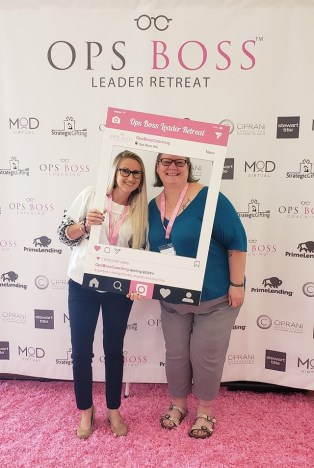
Kacee DeVore and CeCe Mikell at Ops Boss Leader Retreat 2019.

It was #OpsBossLeaderRetreat 2019. #WeGotBossy.

  • 13 hours of scheduled retreat: speakers, workshops, masterminds
  • 18 hours of unscheduled retreat: dinners, lunches, train rides, the National Mall at night

Homework #1: schedule reading these books that ops leaders use in their thinking and doing every day

Miracle Morning, by Hal Elrod: recommended by Kristen Brindley. Structure your morning to get your head right and maximize the day for success.

High Performance Habits, by Brendon Bouchard: recommended by Kristen Brindley. And get the planner to go with it. It’s about the questions you ask yourself every day!

Procrastinate on Purpose, by Rory Vaden: recommended by Kristen Brindley. Focuses on the significance of time

13 Fatal Errors Manager Make and How You Can Avoid Them, by W. Steven Brown: recommended by Adelina Rotar. There are a lot of ways to mess up managing people, and some key corrections YOU make to make managing others more successful.

Scaling Your Business: How to Drive Revenue, Save Time, and Create Your Dream Company, by Daniel Ramsey: recommended by Daniel Ramsey. Text SVP to 31996 to get this book free

The Art of Gathering, by Priya Parker:  recommended by Sheena Saydam. About creating meaningful client events that they’ll fight to come to.

Stand Up: 75 Young Activists Who Rock the World…and How You Can Too!, by John Schlimm: recommended by John Franklin Stephens. Bust through limiting beliefs!

The Power of Moments, by Chip Heath and Dan Heath: recommended by Stephanie Bracket. Creating a culture that makes agents and staff seek out your company to join.

Getting Things Done, by David Allen: recommended by Stephanie Brackett. Check out the workbook too!

The One Thing, by Gary Keller and Jay Papasan: recommended by literally EVERYONE

Visual Journaling
First page of my visual journal. Same concept as a vision board with more focus on discovering yourself and your goals.

And you can see the full list on Amazon here!

There’s more…soooo much more. I’ll share it over time.

PSST: when you go to order your books, make sure to order through smile.amazon.com and choose a charity to receive a donation from Amazon for every purchase you make. I choose Special Olympics South Carolina because it’s through sports and training that my brother, a brain injury survivor, has continued to set and achieve goals in his life, including as a public speaker and advocate for others with disabilities.

Posted in Everyday Musings

Why I Call Myself a Grinch – but I’m Not Really a Grinch

It’s like a switch that automatically turns me off as soon as the Advent 1 church service starts. All of the joy and excitement and celebration that suddenly becomes the center of everyone else’s life for four weeks to Christmas just falls right out of me. Dries up. Heck, runs away screaming.

Because of this, I’ve always called myself a Grinch, sometimes a Scrooge or a Humbug.

But dammit, I’m not. I’m none of those characters. I’m not mean or nasty or heartless. I don’t steal anyone else’s fun and cheer.

I don’t hate the holidays – the secular ones or the holy ones. I don’t hate the traditions, the gatherings, the food, the songs, the colors, the festivities.

But I’m an introvert. The holidays, and my reaction to them, is one of the few ways I know, truly know that my Myers-Briggs 1-point preference for introvertism is really true; seven other behavioral analysis, several repeated, confirm this. I know, it’s hard to believe of me, right?

“The holidays” are inherently a social phenomenon; they can’t happen without the tacit cooperation of groups – mostly large groups – of people, whether parade marchers or watchers, naughty and nice list comparisons, and the most basic present giving and receiving. Even more so, the religious foundation of holi-days is social, beginning with and culminating in a collection of the largest worship services of the year for most churches.

Think about it. There is not one single holiday tradition that carries a positive connotation and is experienced without engagement with others.

And for me – an introvert with a 6-person max – this is excruciating. Even if I’m mostly left to “wall-flower” (which is what I always secretly hope will happen), I watch the clock so that I can cut and run as soon as I’ve attended for a respectable amount of time.

And I do want to be respectful when I choose to attend; I never want to make a host/ess feel like s/he has done something to make me uncomfortable or unhappy. It’s why I choose quite carefully and deliberately when and how and with whom to engage during the holidays.

If I cow to expectations and attend, I’m often noticeably reserved, even if I have a drink. In fact, I willingly – actually cheerfully – volunteer to cook, serve, and especially clean up just so I have an easy excuse to just be rather than interact.

If I do what I want and RSVP regrets in favor of Die Hard and Home Alone marathons, I’m labeled a Grinch, a Scrooge, a Humbug by others.

It’s a Catch-22 of the purest variety.

Because I’m not a Grinch with a heart too small to love others. I’m not a Scrooge who’s been hurt by others and just wants to hurt people back. I’m not a Humbug out to squash others’ celebration. (While I do detest yard decorations with a passion, I’ve never once suggested that others stop decorating or take theirs down.)

But I don’t have any other cultural references to use when trying to simplify my discomfort with the norms of the holidays than to call myself a Grinch, a Scrooge, or a Humbug. They serve to convey that I don’t want to participate, certainly. But the edge of negativity they come with is something I’d like to figure out how to divest.

Posted in Being Healthy, Cooking, corn free, gluten free, nut free, soy free

Prep-ahead Clean Lunch for $3.72: Ginger Chicken, Brussels Sprouts, Asparagus, Roasted Potatoes

You know those prep-ahead clean eating lunch videos – often from Tasty? Well, I decided to give one a whirl.

Here’s the basic concept: pick 1 protein for 3-oz servings, 2 vegetables, and 1 gluten free carbohydrate (rice, potatoes, quinoa).

IMG_2144Mine: chicken breast with ginger aioli, brussels sprouts, asparagus and mushrooms, and creamer potatoes.

I took some help from my local Harris Teeter produce: cut and salt/pepper/garlicked brussels sprouts and asparagus pack ($3.99 each) and a ready-to-bake-in-pan package of creamer potatoes (also $3.99). The potatoes came with a seasoning packet, which I chose to use because the sodium was really, really low.

The only thing I made was garlic aioli. How? Peel some garlic – about 2 inches worth – and pour 1/4 cup of your good oil (olive, grapeseed, coconut) and a pinch of salt into your bullet blender and let it go. Then I brushed it directly onto my chicken breasts. I drizzled the little bit left over onto the brussels sprouts, just because.

Into a 450°F fully preheated oven for 30 minutes. That’s all it takes.

IMG_2148Let it cool and divvy it up into four microwave safe food storage containers. Voila. Lunch for the week – for me, at least, since I have only four days with a fixed lunch hour.

Cost Analysis

  • $2.90 – Chicken Breast – one giant one from a 6-pack, cut into 4 pieces
  • $3.99 – pre-cut asparagus with sliced mushrooms and minced garlic
  • $3.99 – pre-cut brussels sprouts seasoned with salt and pepper
  • $3.99 – creamer potatoes already in a baking pan and including seasonings

Total = $14.87

Cost per lunch = $3.72

Posted in God Loves Me!, Singing

Overcoming Objections for Joining the Church Choir: They’re watching me!

Yep, they sure are! And you can watch them right back…hehe!

One of the most common objections church members cite as why they don’t want to join the choir – after not being “good enough” – is that everyone is looking at them through the whole service. Naturally, this objection is only relevant for churches where the choir sits up front and center-ish.

I get it. I was thinking about that today during church, specifically during the special music when a dear friend and I sang a duet. Yep, we accepted a request that put us in even more of a spotlight than when we sing as part of the larger choir group.

But what I get as the trade-off to being watched is such an exquisite blessing. You who sit in the congregation and never venture to the chancel (front) and turn to face the congregation never get to experience this. You’re just facing the wrong direction entirely and can’t.

Here are some of my favorite things to see each week that you don’t get to:

  • the smile on a congregant’s face when communion is carried to him/her – usually someone sitting pretty far back in the pews – and since we don’t usually turn around, few get to see the gratitude, the inclusion
  • the children when they return to the sanctuary during the Offertory or Doxology, their faces eagerly searching for mom and dad, hands grasping or heads wearing their Children’s Church creations
  • the people who know and love a hymn so well that they put their book down, look up and into my eyes, and smile as we share the joy of that song, those words, God’s love
  • the usher who brings a walker up the aisle at the end of the service to make post-service fellowship that much easier and more comfortable and safer to enjoy

Our choir boasts singers with asthma, allergies, limited ranges, melody-only skills, and we love them all. They sing to the Glory of God, and are blessed to witness each week the unnamed kindnesses and brilliant joys of others because we can see the whole congregation right back!

You can find me singing in the choir most Sundays at Palmetto Presbyterian Church in Mount Pleasant, SC.

Posted in Being Healthy, corn free, gluten free, nut free, soy free

Day-of Homemade Baked Beans

IMG_2085
That splatter around the rim is a result of the sauce reduction process. Yum!

Earlier this year, I made from dry-bean-scratch baked beans for a group of out-of-towners, and well, I think it blew their minds. And I get it. Even my family’s “Aunt Von’s Baked Beans” come from the 1940s, a time when country cooks like Aunt Von would have made most bean meals from dry beans, but even her recipe starts with Campbell’s Baked Beans – already seasoned and sauced.

But c’mon, what’s it gonna cost you to experiment and really understand and control exactly how your baked beans taste instead of trusting what comes out of a can with ingredients made or refined in a lab? These are my day-of baked beans – the only difference is that I start with plain, unseasoned, unsalted canned beans because they are pre-soaked for me. Everything else is the same as my regular dry-bean recipe:

  • 2 cans of great northern beans, drained and rinsed
  • 1 green bell pepper, diced tiny
  • 1 small or 1/2 large sweet onion, diced tiny (try to get Vidalia or Wadmalaw)
  • 1 large or 2 small garlic cloves, minced
  • 1 can of tomato sauce (try to get no salt added)
  • 1/4 – 1/2 cup brown sugar – for my family, I use 1/2 c, for out-of-towners I use 1/4 c
  • 1/3 cup worchestershire sauce – I use a gluten free, corn free, soy free version
  • 1T apple cider vinegar (more if you like it more tart than sweet)
  • 1t salt
  • 1t pepper
  • 1t ginger (ground for sweet, fresh diced for spice)
  • 1/2t all-spice
  • 1 pinch red pepper flakes (literally 10-15 flakes)
  • 3-4 slices of bacon, cut into 1-inch pieces

IMG_2083Mix everything together in a bowl at least 2 hours before you need to start baking (at least 4 hours before serving). Taste to see how sweet, tangy, tart, spicy it is and add seasonings as desired. Keep in mind that at this stage, the tomato sauce is the main source of tangy and that will mellow into sweet during baking; be careful not to go overboard on sweet at this stage.

Ingredients that contribute to sweetness are tomato sauce, sugar, bell pepper, onion, garlic, and ground ginger.

Ingredients that contribute to tangy- or tartness are tomato sauce, apple cider vinegar, worchestershire sauce.

Ingredients that contribute to spiciness are garlic, fresh ginger and red pepper flakes.

Cover with plastic wrap or lid and let marinate on the counter for at least 2 hours. It’s important to NOT put it in the refrigerator because that will slow down the marinating – not ideal for day-of beans.

IMG_2084Pour into 8×8 or 9×9 casserole dish and top with bacon pieces. Put in 350F oven for 90-120 minutes. Test at 90 minutes by lightly jiggling the dish. If it moves like liquid, makes a ripple, it’s not done yet. You’re looking for the liquid to reduce to a thick glaze and fully cooked bacon on top, not a thickened sauce and still-white fat on the bacon. And the bacon won’t really start to cook until the liquid stops touching it.

Another way to think of the ideal consistency of baked beans is that when you spoon then onto the plate 1) you don’t need to use a slotted spoon to drain them and 2) you don’t have to worry about the juice contaminating anything else on the plate.

Naturally, these are my ideals as a Southern cook in South Carolina who learned to cook from a Texas and Oklahoma ranch or cowboy style of cooking. Think about it: you can’t ride a horse around with a pot of juicy beans sloshing around.


Posted in Business Articles

Checking References on a Potential Employer

We’re all familiar with the final section of most job applications where we’re asked to list 3-5 professional references for the potential new employer to call in a final attempt to verify what interviews, demonstrations, and assessments have said about you…or expose something otherwise hidden that would keep them from offering you the job.

Have you ever had a potential employer offer you his/her references to check? You might think with sites like Glassdoor that you don’t need them, that you can find out what you need to know about working for that company or even that individual. But the ability to directly probe a human who has free rein to speak to both successes and failures is invaluable.

I was recently offered employer references during an interview at the same time he asked for my candidate references. Big points in his favor simply for offering; even more for following through with three names and contact information and written permission to dig as deep as I wanted, meaning that I can ask the three references for more people to call and talk to.

Funny thing, though, is that the trusty internet is virtually silent on what might be useful to ask about a prospective employer.

So I consulted a trusted career development professional – a friend/colleague from mutual graduate school days. He confirmed my “gut”: structure the conversation the same way you would for any hiring reference check and base the questions around the future potential for yourself. That’s different from the focus of a hiring reference check where the questions center around confirming examples and patterns of past activity (attendance, reliability, responsibility, promotability, etc.).

INTERJECTION: unlike the vast majority of job candidates, I have always viewed and treated “the interview” as a mutual activity. Interviewing, properly implemented by both parties, is a conversation, not a Q&A. The interview that prompted this blog post was based around a DISC assessment and was, as I expressed to several members of the company, ridiculously brilliant.

My interview conversations, up to the point of reference checks, had illuminated many points of commonality, but, to be fair, must be considered “self reporting” until they can be confirmed. I’m not the easiest to pin down on this, though; I look for something interesting, fun, challenging, invigorating in a career move – not very tangible or measurable, right. But that is, of course, the goal of reference checks: to qualify and confirm the intangibles that are valuable to me.

Here’s how I outlined my Employer Reference Checks:

  • Introduce myself and simply outline the situation: Hi! This is CeCe, and I’m calling in reference to [potential employer name]. We are in conversation about working together to build a team. Specifically, [name] is considering hiring me, and I’m considering working for him/her. Yep, that simple.
  • Tell me about how you came to know and work with [name]. How long, hierarchy of working relationship, still working together?
  • What qualities, talents, or skills made/makes [name] a great colleague? Looking for unsolicited examples of the qualities, talents, skills the interview to date has illuminated to be priorities to employer and to you.
  • Tell me about [name]’s management style or priorities. Can you give me examples of management successes and/or failures? This is a variation on the strengths/weaknesses angle; the question assumes you know enough about management styles and how you need to be managed to achieve optimal outcomes both for the company and personally to recognize an informative answer. I’m also looking for evidence of management qualities or personality qualities that I try to avoid from experiences with bad managers in the past.
  • What would you say [name] values as the most important qualities in team member (employee/direct report)? This question is critical in confirming that what the potential employer has told you about priorities and values confirms and may illuminate values that have not been part of the conversation that may be the deciding factor. It will be up to you to bring that new information to the next iteration of the conversation.
  • Would you work with [name] again and in what capacity/relationship? Would something(s) need to be different for that to happen? This answer is important to me because I have be successful in leaving jobs on such good terms, after doing outstanding work, that the former employer seeks me out for freelance work and future job offers.

Naturally, this is my guide for about a 30-minute conversation, not a prescription for a boring and predictable and useless formula interview. I open a conversation. It starts with a getting to know you question that is relevant to the reason for the call. I listen keenly to that first answer and tailor subsequent questions on the spot, allowing me to respond with affirmations, ask follow-up questions before moving on, or even laughing acknowledging that an answer addressed a question I hadn’t even gotten to yet.

Some might argue that the idea of a candidate checking an employer’s references is a sign of mistrust. Of course it is, and rightly so. There is absolutely no good reason for a candidate for hire to blindly trust any individual who or any company which has not directly demonstrated the integrity and promise-fulfillment necessary to engender a basic level of trust. That process begins upon hire, and is the primary reason for trial or probationary or training periods: to determine if expectation-fulfillment matches on both/all sides and is the right intensity for achieving both company and individual goals.

The Lesson: at the point in the hiring process where the employer is ready to check references, as for some of your own. While it’s not common and a refusal isn’t necessarily a negative indicator, accommodation is definitely a positive nod to the mutual respect and trust necessary for a basically good working relationship.

TIP: Don’t forget your basic, strong phone demeanor: smile, laugh, confirm that you are listening with words rather than uh-huh before moving to the next question/topic. And prepare a voicemail message ahead of your call so you’re not scrambling for the words.

Posted in Being Healthy, corn free, gluten free, soy free

Gluten-free Italian Dinner: Pesto Chicken and Tomatoes and Rice

IMG_2078Gluten-free means you can never have authentic Italian food again, right? WRONG! There’s so much more to Italian food than pasta. Here’s one of my favorite 1-pan Italian dinner bakes that hits the rights notes with the whole family.

Ingredients (in order of use):

  • 1.5 cups white rice (long grain, jasmine, basmati, whatever)
  • 1 14 oz can of diced tomatoes with Italian seasonings already included
  • 2 cups water, chicken stock, or combination (especially if you have some you just need to use up in the fridge)
  • 2 lb. chicken breast and/or thighs, skinless, boneless (roughly 4 pieces, 1 per person)
  • 1 8 oz container of pesto

NOTE: this is the semi-homemade version, as Sandra Lee might say; you can certainly make your own chicken stock, dice your own tomatoes, and blend your own herbs into pesto if you’re so inclined.

Pre-heat your oven to 350°F.

In an 8×8 or 9×9 baking dish, combine the rice, diced tomatoes, and chicken stock (or water). Put in the oven for 30 minutes.

After 30 minutes, remove and stir mixture; most of the rice will still be small and hard – don’t worry – that’s normal!

Add your four pieces of chicken. Spoon roughly equal amounts of pesto over each one – approximately 3 Tbspns – and spread to cover the chicken.

Return to oven for 30-45 minutes, depending on how large/thick your chicken pieces are.

This dish is really great for Southern American families where red rice is king; the minor change up in herb seasonings helps keep things fresh without completely blowing picking kids for a loop.

TIP: make ahead and reheat or freeze. When you thaw it out, add about 1 cup of stock or water to make sure the rice doesn’t dry out when heated in a 350°F oven for about 30- minutes (assuming thawed to room temperature.

Posted in Branding and Marketing, Business Articles

Marketing That Worked on Me – and Why

I’ve spent my entire life studying and employing the devices of successful rhetoric to convince someone else to do or think what I tell them. Marketer is just one title for people who do this. Yep, that’s what marketers do, day in and day out: research what motivates target customers to choose them, and then create the company messages to make sure that happens.

Certainly, marketers have access to a wide variety of media as well as mixed media to deliver and reinforce the messages they want you to accept as truth and actions they want to compel you to perform.

So when a simple, inexpensive mailer campaign sequence is successful with me – who spends most waking moments at least subconsciously dissecting messages for agendas – I stop to really consider why. And if what I can tease out is replicable, I share that information with the company. In this case, I’m examining my reaction to Honest-1 Auto Care, the Mt. Pleasant branch.

IMG_2066In early summer 2017, I received in the mail a classic postcard bulk mail piece advertising several service specials at a local auto maintenance and repair shop. I know it is bulk mail because the address reads my name on the first line and “or current resident” on the second; this ensures that the piece will be delivered in the relevant service area rather than be forwarded to a previous resident with a forwarding order in place.

Now I’m pretty immune to physical junk mail, including advertisements like this. What happened to make me notice it means backing up just a touch. I had paid off my now-ten-year-old vehicle since my last oil change, which I’d always had done at the dealership. But I was ready mainly to establish a good relationship with a shop much closer to home and work; the dealership was at least 30 minutes away in a part of town I rarely have a need to visit. And I had spoken with my mom about some of the shops she’d used and been happy with on our side of town. And she got the same postcard on the same day and called me to point it out.

That’s what it was. That’s what made this very first “touch” successful. All I needed was an oil change, the shop was perhaps 1 mile from my house and did not require an appointment, and I knew it had been there a good long time, so it must have a reasonable amount of repeat business and/or referrals to at least maintain.

Conclusion (touch #1): there is nothing replicable about the success of this first touch from my response as there is no way the marketers could know all of those specific, converging circumstances that made me primed for the response they were trying to lead me to. But it stands to reason that twice a year (on average) an oil change or routine maintenance is on every driver’s mind, as well as the cost and convenience of acquiring those services.

So one weekday afternoon when I had no appointments, I drove the 1 mile to the shop, walked in, was greeted by a smiling service receptionist (touch #2), got set up as a new client, treated myself to a cup of coffee from the courtesy Keurig, and relaxed with my book in a comfy chair for 35 minutes. That’s when the service receptionist shared with me the courtesy inspection results and recommendations from the techs…with absolutely no pressure to add anything to my commitment for that day. But she did promise to email me the report. Further, when I got in my vehicle to leave, the technician had signed and left a simple “thank you” note card on my passenger seat (touch #3). As I had been promised, when I next checked my email, they had forwarded the report and receipt (touch #4). I also had an email (touch #5) asking me to review their services; good on ’em for asking, something most companies seem terrified to do!

Conclusion (touches #2, #3, #4, and #5): while it’s hard to predict the effect of the same service receptionist on various customer personalities – and, give me credit, I was playing nice that day – it’s easy to compliment a clean, comfortable, climate-controlled, quiet waiting area with free WiFi if I had chosen to work or play on social media instead. It’s easy to compliment a clean, groomed, uniformed receptionist who kept a smile on her face even when she was on the phone and not visible to the caller. It’s easy to be pleased to learn that the overt promises they made, they kept in emailing all of the paperwork from the visit. It’s easy to be grateful for the emailed information and even the prompt for a review, both clearly the result of programmed responses and delays in a CRM. These are replicable conditions that are known to inspire confidence and result in positive results.

I really did keep in mind the recommended service – it was a good and simple and necessary maintenance – and I had intended to get it into my budget and schedule. But I’m also glad I was just distracted enough to not get my butt in gear for 2 weeks after that initial visit. Why? Because two things happened within days of each other:

  1. they emailed (touch #6) me a reminder of the recommended service along with an estimate based on my vehicle
  2. they mailed (touch #7) me a “check” for $15.50 to use towards any service. In the memo line, they called it an “Auto Repair Rebate Check,” but it amounts to a gift card.
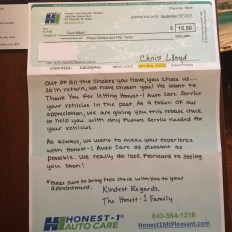
IMG_2065Now, I’m not a couponer, not even a casual one, but I can live for a month off of the gift cards I receive at holidays – and I LOVE it! For the most part, I don’t bother on items, say $5 and under; chalk it up to convenience – or inconvenience – fees of clipping coupons and purging when they expire. But when you send me a gift card for $15.50 off of a service that’ll run me close to $80, that’s a big deal in my pocket book.

Conclusion (touches #6 and #7): CRMs are an outstanding tool, especially for automated follow-up marketing (aka repeat sales) in industries where sales interactions take place months apart. Time limits on “coupons” are excellent, necessary even, but I’d argue that 60 days from the visit is too long a period to generate the action desired; I’ve delayed long enough to receive a second reminder.

I’ve been pleased with this company’s communication, programmed and delivered by a simple CRM with simple automated marketing. It’s a powerful tool – that automated marketing. It makes it easier for a marketer to switch up the gentle and the aggressive messages for the best opportunity to generate that desired response from a variety of customer types. Naturally, if my interpersonal and/or service experience hadn’t matched up, I surely would not have been as receptive to the reminders or the coupon/check.

I’m scheduled to use my coupon/check the last week of August.

NB: The initial postcard indicates that marketing is generated by the corporate office in Marietta, GA, the coupon/check lists my local shop in Mt. Pleasant, SC.