Posted in Business Articles, Content Marketing, Housekeeping

Cleaning Up Your Networking Plan for Convention

600600p3069EDNmain692business card networking 300x250Networking – like any other business activity – requires a plan, measurement, and correction/improvement if you’re to be successful at it.

With over 16,000 people to meet at the annual ISSA/INTERCLEAN Trade Show and associated conventions for ARCSI, BSCAI, and IEHA, your post-convention tasks can stack up pretty quickly. It’s easy to get bogged down in turning new marketing strategies into a marketing plan for the next year. It’s even easy to make a list of all of your products, prices, and long-term costs and make some supply switches. But what usually gets lost in the melee is your follow-up networking. After all, the people you meet are the most constant and the most concrete resources you’ve acquired at the convention.

Networking is perhaps the single most effective tool you have toward meeting your business goals. Whether you are trying to buy a business to expand your empire, sell your business, add divisions and specialties toward diversification, solve a problem or exploit an opportunity, a healthy and thriving network offers you the opportunity to talk to experts on any issue you might have, especially business owners who have “been there; done that.”

Now before you begin to craft a networking plan, know upfront that networking is money-cheap but time-expensive. As you create your plan and work through each step, be careful to make choices that clearly benefit your business. Your time is expensive, and you want to be able to measure the ROI of your networking.


1. Start networking before the convention

Yes, your networking starts before you actually meet anyone. All of the organizations convening in Las Vegas next week provide a list of others who are exhibiting and sponsoring various events.

The key here is to think of the vendors not simply as suppliers. With many having more years in the cleaning industry than the average cleaning business, these vendors are rich resources. They work closely with cleaning contractors on a daily basis and spend their time developing solutions to custom projects and unique problems. And they are also humble; if they can’t give you the insight you are looking for, odds are they will know someone who can.


Of particular value is the ISSA app where you can browse the list of more than 690 vendors who will be showing at ISSA/INTERCLEAN. Using this app and the online schedules from the other associations, you can review vendors and presenters you’d like to meet. Reach out to them NOW and make appointments to meet, even if for only 15 minutes.

You may also be able to review a list of association members who are registered for the conventions; take a look at those names, think of who has been a thought leader on LinkedIn or other professional discussion boards, and reach out to make plans to meet those people as well.


2. Organize those names and contact information

Between business cards, flyers, presentation handouts, and random notes on napkins, receipts, and tiny slips of paper, sorting through the collection of new contacts can be daunting.

With each contact you gain, jot down a note on their card about how you think you might work with that person now or in the future at the time you meet him/her.

Later, you’ll be able to make priority piles based on when you think you’ll want to work with them: 3 months, 6 months, 12 months. A twelve month pile is as long as you want to go because, if they’re still around in 12 months, you should see them again next year at the convention.


3. Send each a personalized message

Set a schedule for sending out personalized messages to each of those contacts. For your 3-month pile, make it a priority to get that message out about 10 days after the convention ends. Why delay? You want to avoid getting caught in the pile of emails that stacked up while you were all at the convention together.

It’s equally as important to follow up quickly with the folks in your longer-term piles. You’ll want to establish and nurture a good relationship with those new contacts so that later when you’re ready to initiate a project together, you’ll be ready to hit the ground running.

So what should you write in these messages? Business writing expert Lynn Gaertner-Johnston offers a simple formula for that first message, one that is designed to promote continued dialogue:

  1. Mention the meeting and conversation – to jog their memory
  2. Refer to something specific from that conversation, especially something you want to make a mutually-beneficial activity
  3. Suggest a way to continue the conversation – a meeting, phone call, site visit, etc.
  4. Attach an article or include a link that supports and strengthens your connection
  5. Tell them what you will do next in relation to your connection

Click here for examples.


4. Connect in a variety of methods

It’s easy to get stuck in the electronic mode – connecting by email – but don’t forget that phone calls and even face-to-face with local representatives can lead to even richer networking opportunities.

  • Enter the contact into your address book – whether that’s manual or electronic
  • Connect on LinkedIn, Facebook, Twitter, and other shared platforms
  • Sign up for each other’s newsletters – yes, encourage even the vendors to sign up for your business’s newsletter to give them a way to keep up with your business without always having to call you and ask what’s going on.

What happens from there is largely dependent on the success of that first follow-up communication you sent out. Be sure to track those messages and continue to reach out when at first you don’t succeed:

  • Did the recipient respond?
  • Did the recipient respond in the way you asked or expected?
  • What is your next move?
  • Did you put it on your to-do list and your calendar with a deadline?

As with all business activities, a clear, decisive plan of action, a method for measuring success, and the opportunity for course correction and improvement are essential for networking to be successful…until next year’s convention when you’ll add a whole new group of new connections to your network!

Originally published November 12, 2013 at CleaningBusinessToday.com.

Posted in Business Articles, Housekeeping

There’s no such thing as a “green” disinfectant, says the EPA

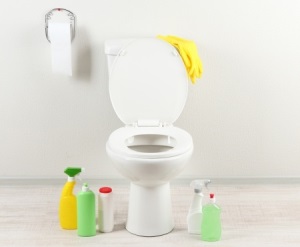
600600p3069EDNmain94toilet with cleaners 300x250There’s no such thing as a “green” disinfectant, according to the EPA. Disinfectants are designed to kill and so do not meet “green” expectations.

There’s no such thing as a “green” disinfectant, according to the EPA. Disinfectants are designed to kill and so do not meet “green” expectations.

Except for the EPA-established TANCS system used exclusively in the Advanced Vapor Technologies Ladybug…the only EPA-recognized disinfection device to date and which meets both the EPA standards for disinfection AND all green expectations! The TANCS system is the ONLY device that the EPA has validated as a disinfection device!

Even more important from this article: the EPA will not accept green-certified products for registration as disinfectants, nor will the EPA allow green certifications of products to endorse product claims about disinfection.

Lesson: there’s a HUGE difference in being an EPA-registered disinfectant and “meeting EPA standards for disinfection.” Make sure your company’s marketing claims don’t overstep their bounds!

The following appeared in various research studies and reports through May 2011, as reported at CleanLink:

Disinfectants are designed to kill, hence, they are not considered “green.” Disinfectants, however, are necessary in specific applications, such as an operating room. This is where product usage and facility priorities come into play. The BSC needs to work with the facility to identify what kill claims are necessary and determine what types of products carry those claims. From there, the BSC can try to find the “greenest” product.

The “greenest” option may include a neutral pH (safer for the worker than something highly alkaline), low or no VOC (improves the indoor air quality for building occupants), or no phosphates (that can be harmful to aquatic life).

BSCs should also consider the intended product use. Infection control through disinfectant use is important in high contact areas (door handles, faucets, etc.). Low contact areas, like floors, may be better served with a good cleaner. The BSC should be willing to discuss these alternative cleaning options, as well as alternative chemical options, with the facilities they service.
— Rebecca S. Kaufold, chemist, Spartan Chemical Co., Inc., Maumee, Ohio.
Even though in the United States there are currently no green certified disinfectants (as not allowed by EPA), BSCs should review and compare the following attributes in disinfectants and advise their customers of that fact and why they are using a particular disinfectant.

First, look for disinfectants that do not contain Nonylphenol Ethoxylates (NPEs) or octylphenol polyethoxylates (OPEs) and have a pH value close to 7. Second, compare level of detergency (cleaning ability and more is better). Third, look at the parts per million (PPM); the higher the better. Fourth, look to ensure the disinfectant has any required kill claim. For example, if the customer is concerned about swine flu (H1N1), ensure that specific kill claim is on the label. Lastly, look for a disinfectant with very broad kill claims.

More importantly, advise the customer that you will not be overusing disinfectants (just because they are usually less expensive than a quality cleaner), and when you do use them, it will be with proper procedures — pre-clean, apply disinfectant, allow required dwell/wet time, rinse or wipe dry as per label instructions.
— Mike Sawchuk, vice president, Enviro-Solutions/Charlotte Products, Peterborough, Ontario, Canada.

The US EPA office responsible for registrations is not allowing certification of disinfectants or sanitizers by organizations such as Green Seal or EcoLogo. Similarly, they are not letting companies claim their disinfectants are “green” or “environmentally preferable.” The reasons are complicated and are based in the Federal Insecticide Fungicide and Rodenticide Act (FIFRA). The bottom line is companies can’t claim their products are green due to FIFRA.

BSCs should use the right product based on their needs. Killing bacteria, viruses, and mold is an important part of a sustainable cleaning service. Work with your supplier to get the right product for the job.
— Dan Daggett, Ph.D., manager, Corporate Sustainability, Diversey Inc., Sturtevant, Wis.
Interestingly enough, a recent article published by Infection Control Today, indicates the mechanical removal of germs was more important than the chemical or actual disinfectant, when cleaning hard surfaces. Even when disinfectant and/or sanitizing products are used, the proper dwell time isn’t allowed. Nothing can replace a good general cleaning program and choosing safer cleaning products with low VOC’s with a minimal to no impact to the user and environment is the best solution.
— Brent Crawford, president, Core Products Co., Canton, Texas.

Originally published October 15, 2013 at CleaningBusinessToday.com.

Posted in Business Articles, Small Business Tips

Case Study: Handling Sexually Explicit Incidents

600600p3069EDNmain655suprised-w-dustpan-615-x-350How should you respond when your employees encounter sexually explicit situations? Our experts examine three real-life incidents and weigh in on how a Houston cleaning business owner handled them.

The Backstory
Julie Parish has owned a successful cleaning company, The Home Keepers, for more than 18 years. Her business is located in Houston, Texas. Recently, her cleaning technicians encountered three separate incidents of sexually explicit behavior or materials at three different homes they were cleaning. These unsettling encounters raised many questions about how to handle such situations as a business owner whose employees have been put in highly uncomfortable positions. “What do you say to a client when these things happen? And how do you prepare your employees to deal with these incidents?” asks Parish. “There’s a lot of grey area here. How do you know when you should drop a client? What’s the law on these situations?”

Here’s an overview of the three incidents. The first problem occurred with a new male client. It was The Home Keepers first cleaning at this client’s house. He was at home when Parish’s two, female cleaning technicians arrived. After having been closed off in his master bedroom by himself for quite some time, the client asked the women to clean his master bathroom. As they walked through the master bedroom to access the bathroom, the women realized that the client was watching pornography on his computer. One of them stepped away to call the office and report the situation.
“I told them to pack up and walk out, and don’t say a word,” says Parish. “The man had not been easy to deal with from the start. He’d cursed at one of my employees a few times over the phone and had been extremely rude to me as well, so I chose not to call him about the incident. I waited until he called me, which he did a few days later. He said, “The cleaning ladies told me they were going to their car to get something and never came back.” He asked why they had not returned. I explained that because he was watching porn, I had instructed my employees to leave immediately. I told him that I would not subject my employees to those kinds of things. I told him we wouldn’t be able to clean his house again. As for payment for the hours they’d worked, I told him we’d just call it even. Because of his past behavior, I thought he was going to write a bad review on Angie’s List. Instead, he just said, ‘That’s fine.’ We never heard from him again. We were lucky that time, but it’s difficult to know how to handle these situations with clients.”

The second incident happened only a few days later at the home of another new client. This encounter was much worse. In this case, a long-time client hired Parish’s company to clean her daughter’s home. Three of Parish’s female cleaning technicians showed up at the daughter’s home where they found her with her young daughter and six men. About ten minutes into the cleaning, the female client asked five of the men to go outside to the backyard with the child.

One of Parish’s cleaning technicians was working in the master bathroom when the female client came walking into the master bedroom with the sixth man. She was saying that she was horny and taking off her shirt. The female client and the man began engaging in sexual activities while the cleaning technician was working in the master bathroom. The technician turned on the vacuum cleaner to make sure the couple knew she was still in the bathroom. This changed nothing. In the minds of the cleaning technician, the female client clearly knew they were in the bathroom when decided to engage in sex anyway. After all, she’d asked the other five men and the child to wait outside. The cleaning technicians felt highly disrespected. The technician was so angry and humiliated she gathered up her stuff and walked through the room hollering in Spanish, “We’re leaving! We’re leaving!” The other two cleaning technicians followed her lead, left the house and called Parish from the car.

Parish recalls, “The moment I found out what was happening, I told my employees to come back to the office.  I also called the mother – who was actually the person who hired us. I was embarrassed for the mother and didn’t tell her any details. I simply said that my employees were very upset and I needed her daughter’s phone number so I could speak with her directly. I called the daughter. I was just shaking, I was so mad!  I told her that I had instructed my employees to leave her house immediately! I explained that they were extremely upset by what she was doing in front of them. I told her that what she did was SO DISRESPECTFUL and that we were ALL extremely upset! The customer apologized to me a couple of times, and asked me to please tell my employees that she was sorry she’d made them feel bad. I believe she was genuinely sorry.  My thoughts at the time were, what the heck is happening in this world!”


The last incident was the mildest of the three, but still disconcerting. One of Parish’s cleaning technicians foundobscene pictures of two men engaged in sexual acts. The photos were lying across a bathroom countertop. The employee took a snapshot of the photos and sent it to the office. Despite the extremely graphic nature of the photos, Parish’s female technician handled the situation calmly. She gathered the photos, stacked them all together, turned them upside down and moved them to a corner of the room.

“We kept this male client as a customer,” says Parish. “I didn’t know if this was a one-time incident where he’d forgotten to remove the photos.  I did not say anything to the client. The cleaning technician didn’t get upset. But what happens if this type of thing happens again. What’s the right course of action then? There are many smaller incidents that my cleaning technicians have to deal with on a regular basis. They find inappropriate things when cleaning bed sheets or bathrooms. I think that sort of problem is fairly widespread. What can a business owner do about those types of smaller incidents? And if you decide that a client has crossed a line and you don’t want to clean for them anymore, what do you say to them?”


Mel Kleiman, president of Humetrics
“Training is crucial for these types of situations,” advises Mel Kleiman, president of Humetrics, a company which has been helping employers standardize and systemize the way they recruit, select and retain frontline hourly employees and their managers for more than thirty years. “You need to prepare your employees to handle a wide variety of uncomfortable problems, from the inappropriate magazine or photo left in plain sight to the most egregious client behavior encountered by Parish’s employees.” 

He adds, “Cleaning technicians are going into clients’ homes. They’re bound to stumble on intimate items. The question is: where does a company draw the line? I think the cleaning technician needs to be part of that decision-making process. If a cleaning technician feels truly uncomfortable in a particular client’s home because of that client’s behavior or items found in that client’s home, then that employee should have an outlet for communicating those concerns. I’m not a lawyer, but it will be interesting to hear what a legal expert has to say about Parish’s problem. My understanding is that sexual harassment laws have to do with how an employee feels in any given situation. With this in mind, company owners should have a process in place for employees to report “inappropriate” client behavior. If an employee feels truly embarrassed or uneasy about the working environment at that client’s home, then that process should enable them to request reassignment.”


Elizabeth J.V. Speidel, Attorney at Haynsworth Sinkler Boyd, P.A.
This employer handled the situation well. She told her employees to leave these homes immediately, which was exactly the right thing to do. Sexual harassment laws apply not only to employers, but to third parties, such as service providers and independent contractors. If an employer allows its employees to be harassed by a third party, that employer may expose itself to substantial liability and litigation.

Employers with fifteen (15) or more employees are required to comply with Title VII and to adopt non-discrimination and anti-harassment policies.  For examples of such policies, I highly recommend that employers visit the U.S. Equal Employment Opportunity Commission (EEOC) website to read the exact legal definition of sexual harassment. Generally speaking, sexual harassment is behavior by a co-worker, supervisor, or even an outside contractor that is pervasive, ongoing and unwelcome.  Further, employees who experience such unwelcome conduct have an obligation to report the behavior to their employers.

There’s no doubt that cleaning technicians are going to see private things in client’s homes. Sexual harassment laws are not designed to protect the faint of heart. Just because an employee is easily offended, doesn’t mean that he or she has a legitimate legal complaint. However, employers need to make sure they have a reporting process in place for their employees.

For example, let’s talk about how to handle the client watching porn. Yes, that’s really tacky, but unless he has asked the cleaning technicians to watch with him, I don’t know that this would meet the legal definition of sexual harassment. Anytime an employee encounters an incident like this and feels uncomfortable, though, he or she should have a way to report this behavior to his or her supervisor. The supervisor then has a record of the incident and can decide how to handle it in the moment or in the future if the behavior is repeated.

If an employee does make a complaint of sexual harassment, the employer has an obligation to conduct a prompt, thorough investigation into the complaint.  No matter the result of the investigation, the employer should then follow up with that employee and tell him or her how it is going to deal with the situation. And, of course, an employee cannot be disciplined or terminated for filing a sexual harassment complaint.

Further, if a cleaning technician witnesses illegal activity or items such as pornographic pictures of children, drugs or physical abuse, he or she has a legal obligation to report this to a supervisor.

I also strongly suggest employers include language about sexual harassment and termination clauses in their contracts with clients. The EEOC has some sample language that employers can use in writing their contracts and terms of service.

Marilyn Suttle, Customer Service Trainer, and bestselling author of “Who’s Your Gladys?”
It can be alarming for cleaning staff members to run across sexually explicit materials or behaviors. From a customer service perspective, there are specific things you can do to maximize positive outcomes when handling challenges like the ones Julie faced. Keep these things in mind:

  • Document the process you want employees to take in your employee handbook. Sharon McRill, owner of the Betty Brigade, a company that cleans and organizes homes, has a written an outline of specific actions for her staff to take when feeling uncomfortable, including calling a supervisor, and quietly leaving the home.
  • Organize periodic sensitivity conversations. Employees can learn from you and each other so they develop discernment between over-reacting when finding a “toy” on a bedside table, or under-reacting to disturbing materials or illicit behaviors.
  • Calm down before phoning the customer. Otherwise your odds of escalating the problem go up. Replace “judgment” words like disgusting or filthy, with a description of the situation. Sharon McRill had to phone a regular customer who decided to wear a robe, minus underwear as her staff worked on his home. They phoned Sharon and were told to leave the home. Once she gained her composure, Sharon phoned the man. She could have said, “That’s creepy and I won’t subject my staff to that.” Instead she said, “It’s not acceptable for my staff to be in your home when you’re only wearing a robe. Our clients need to wear pants.” By remaining respectful but firm, she was able to get her point across and salvage the client relationship.
  • Clients who repeatedly act inappropriately toward you or your staff members, or who refuse to follow the necessary processes that allow you to do a good job for them, may need to be removed from your client list. Don’t let a customer’s disturbing behavior or lack of integrity adversely affect your business. Politely encourage such customers to move on to your competitors. An explanation as simple as, “Our business relationship is not a good fit for either of us” can keep the customer relationship respectful, even when it’s ending.

The information contained in our Case Study article has been supplied by the participants whose names are mentioned. The editors at Cleaning Business Today have collected and reported the statements of the participants, but have not attempted to verify the accuracy of the information supplied. Accordingly, Cleaning Business Today does not make any representation, warranty or undertaking expressed or implied with respect to the information contained in this article and no responsibility is accepted by Cleaning Business Today as to the accuracy or completeness of that information.

Originally published September 23, 2013 at CleaningBusinessToday.com.
Posted in Business Articles, Housekeeping

And the Toxie Goes To…

600600p3069EDNmain633toxiesPhysicians Battle Toxic Cleaning Chemicals with a Hollywood Twist

For four years now, Californians for a Healthy Green Economy (CHANGE) and Physicians for Social Responsibility – Los Angeles (PSR-LA) have grown their multi-media campaign “The Toxies” to educate consumers about the hidden yet pervasive toxic chemicals that surround us every day at work, in the home, and outdoors. By putting an awards-show, red-carpet glamor on the annual awards event, the campaign gains both on-site public attention as well as a larger reach online to both the professional industries and the consumer.


Each year, at least one Toxie winner – often more – have come from the cleaning world, and the 2013 awards was no exception. Three rise to the top as major offenders among the various segments of the cleaning industry:

Yellow Soap – a powerful degreaser found most commonly in car wash operations, Yellow Soap is blamed for causing inhalation and contact-based chronic illnesses among professionals using the product.


Because Yellow Soap is not required to follow the US Hazard Communications standards – that is, Yellow Soap has no MSDSheet – the cleaning industry is having a difficult time identifying the specific toxins in the product. Worse yet, Yellow Soap is omitted from the currently Safe Chemicals Act under consideration by Congress, which means neither professionals nor consumers will be protected from it. Read more about Yellow Soap.

BPA – while the potential for damage by BPA to the reproductive system is increasing as common knowledge, the continued pervasiveness of BPA still catches many off guard. Many manufacturers have switched to BPA-free containers for their chemicals, but often equipment manufacturers don’t have that luxury.


BPA remains a common ingredient in many of the large containers, plastic handles, hand-held tools, and mechanical equipment used in the cleaning process. Read more about BPA that will surprise you.

Flame Retardants – Certainly our fire restoration specialists will be quite familiar with the dangers of flame retardants in their segment of the cleaning industry, but all segments that come into contact with fabric-based and upholstered furniture, draperies, and pre-fab furniture. Why? Because nearly all of it has been treated with flame retardant chemicals.


While adding a toxin may make it less likely that these items will contribute to a fire, that same flame retardant toxin is a regular hazard to the cleaning technicians and upholstery specialists charged with keeping those items maintained. Read more about the hidden dangers of Flame Retardants.

Other Toxie “winners” include several classic contaminants like Lead and Mercury as well as some emerging stars like the Fracking Chemical Coctail and the new pesticide Chloropicrin.


Click here to watch all of the 2013 Toxies Webisodes.

Originally published August 19, 2013 at CleaningBusinessToday.com.

Posted in Business Articles, Housekeeping, Small Business Tips

Quantum Sweep: How to Choose Service Software for Your Cleaning Business

600600p3069EDNmain605quantum-sweep-300-x-250Because the ability to grow your cleaning business rests on your ability to deliver the customer service your client expects, and scheduling (or field services) software is a necessary component to knocking down barriers to growth.

JOIN ANY CLEANING INDUSTRY DISCUSSIONboard on LinkedIn, and chances are you’ll find scheduling software and cleaning job management programs among the top ten questions. Why? Because the ability to grow your cleaning business rests on your ability to deliver the customer service your client expects, and scheduling (or field services) software is a necessary component to knocking down barriers to growth.

Why Invest?

Pen-and-paper systems aren’t going to grow with your business or create efficiencies. They won’t help you drive growth and sustain the level of customer service you want to be known for. Most cleaning businesses seem to start off with simple, convenient and low-cost methods of scheduling jobs for clients. Even with the simplest calendar book, you might squeeze in three teams cleaning at the same time before you run out of room. Several online calendars, such as Microsoft Outlook or Google Calendar, allow you to automatically schedule recurring clients, which is the ideal in establishing a regular and predictable cash flow.

But the ability to get a client on the calendar correctly is just one small piece of the massive responsibility of “scheduling.” When you’ve selected the best software for your business, you can:

  • Enable planned and sustained growth by expanding your capacity to service more clients
  • Enhance customer service by reducing scheduling mistakes, overbookings, missed jobs, changes in day/time of services and or scope of work
  • Improve efficiency and save time by tracking customer information and running standardized work orders

We all know that time is money. That’s why making the investment in a piece of software designed to improve customer service is a critical investment that every business owner must make. It’s a leap of faith and finances, but one with thorough internal evaluation and realistic projections. Let’s look at five areas of analysis you need to invest time in before buying new scheduling software.

1 Function: What do you need the program to do?
Let’s get the price question out of the way with a hard reality: If the program can’t do what you need it to do, then it doesn’t matter how cheap it is; you’ll get what you pay for it. As CBT columnist Marilou Butcher Roth wrote in the May issue, “Take some time and evaluate what you truly enjoy and/or want to get done”. That’s perhaps the most important thing you can do in the process of choosing any tool to help you grow your business.

Start out by listing all of your complaints about your current way of tracking jobs, scheduling customers and keeping track of the responses:

  • What can’t it do?
  • What is more difficult than it should be?
  • What parts take more time than others?

Set yourself a time limit so you don’t dwell too long in the negative, but usually this transitions pretty easily into the wish list – the things you want an ideal program to do for you.

Armed with both lists, step back and prioritize your needs and your wants. Start with deal-breakers – functions you can’t live without – and branch out into the ideal wants from there.

If you have employees who do any part of scheduling and customer service, it’s essential that you involve them in this process as well. Their perspective can show you other places a program falls short or excels and can illuminate possibilities. This step will set you up for a more efficient program review.

2 Features: What can this program do?

The key to comparing a huge list of features is to figure out which ones are standard and which are truly special. Place your priority needs side-by-side with the features offered. CBT invited twelve field services and scheduling software providers to respond to a survey about their programs, and six responded: MaidBooks, Maid Easy, ScheduleView, Service Autopilot, ServiceCEO, ServiceTask and Thoughtful Systems.

The trickiest part of evaluating the features based on a checklist or comparison is that you still don’t know how good a program is until you’ve seen it and used it. But it’s reasonable to narrow the field for deeper testing.

Tip: don’t let sales hype on standard features be your decision maker; don’t let them sell you on standard features. These are basics that all field services software should be expected to have.

Whenever possible, try out a free trial of a program. Without your own actual customer data in there, it’s still just a test. You want to confirm that essential features are both part of the program and that they operate in the way you need them to.

Tip: don’t forget to test the reporting capabilities of a program. Check how deeply the reports dig for information that is useful to tracking costs, verifying ROI, calculating payroll, and more!

3 Fit: Does it match your specific needs?
No industry has a true “all-in-one” system that meets both function and business needs. But then you might want a program that is just okay at everything instead of superb in its area of expertise. That’s why “Fit” is such an important area of analysis: how will this new system integrate with your other process and programs?

If you started out with a thorough examination of your own business activities and systems, then you’ve already made your “Fit” analysis a little bit easier. Ask the software representative very direct questions about integration with programs that assist with:

  • Sales/Marketing
  • Customer Records and CRM
  • Accounting
  • Inventory
  • Employee Records
  • Online Survey Tools

Probably the most requested and expected integration is that with Quickbooks or a similar true accounting system, but there are any number of other programs you may be using that could integrate to improve efficiency. If you don’t see something listed, ask if an integration exists or if one can be created. Knowing a provider’s ability to grow in that direction can jump start your analysis of the future possibilities of the software.

4 Future: Where is the industry going?
With the rapid rise of technology-enabled workflows and business growth, there are two main areas of the future of the cleaning industry that you cannot afford to ignore. In business today, we are seeing two major leaps enabling better customer service and service delivery.

The first area you should consider is the shift from installed desktop applications, where you have to be on a specific computer to operate the program, to cloud computing, where the program and the data are online. When a program offers both an on-site and a cloud version of their platform, try to test both. Look for differences in functionality and features between the two versions, and weigh that against ease of information access and cost (fees PLUS employees’ time using the programs).

Related to cloud computing, mobile technology is increasingly used in nearly every aspect of business operations. Consider programs that already have an operational mobile application for your smart phone or tablet, as they are also looking toward the future. This also serves as an indication that a program is in constant development and is responding to the needs of the industries they serve, but you still want to ask about what changes and updates they’ve got in queue for continuous development and improvement.

If you’ve made the decision to go “cloud,” then you’re setting yourself up for the new opportunities and applications enabled by mobile devices: smart phones, tablets and more. Be sure to think through the impact this will have on your total investment and budget accordingly.

5 Funds: Does it fit your budget?
While a few options offer a one-time fee to purchase the software, most are based on a monthly subscription, which may be friendlier to your cash flow and allow you to make the investment more easily. As you consider the financial cost, look beyond the advertised pricing for other regular or periodic costs, such as upgrades, service fees, support fees and early cancellation fees.

Your time should also be accounted for, so ask what set-up services and support is offered and at what price. Be realistic about your ability to invest time in learning and setting up the system. Document those processes . That way you will be able to train a leadership employee to help you when your business has grown so much that you can’t handle all of the calls and support by yourself. After all, that is the goal, right?

Final Thoughts
Though it’s tempting to ask the open question on LinkedIn, “What’s the best scheduling software for a cleaning business?” and to think you’ll select whatever the industry superstars are using, it’s ultimately the wrong question. Best can only be determined by looking through the lens of your business goals, which are unique.

Originally published July 9, 2013 at CleaningBusinessToday.com.
Posted in Business Articles, Lighter Topics, Small Business Tips

PC Tips: Clean Up Your Deskwork with Keyboard Shortcuts

600600p3069EDNmaincomputer tips 200pxLike cleaning, computing with both hands saves time!

If you’ve taken Bruce Vance’s IICRC House Cleaning Technician certification class, then you’re well acquainted with the best practice of cleaning with both hands to reduce time and improve efficiency…both of which ultimately help your bottom line.

If you do the same at your keyboard during your desk work, think of how much more time and energy you save there as well! After typing text, the copy, cut, and paste functions are the most commonly used creative and revising actions in most any word processing program.


Copy Control + C
Cut Control + X
Paste Control + V


It seems simple and does take some practice, but just as using both hands in cleaning is more efficient and less tiring to your right hand/arm, using both hands in typing and office work achieves the same goal!

By the way, YES, these keystroke options for copy, cut, and paste work the same on a Mac computer as long as you know which key on the Mac is the Control key.

Originally published June 27, 2013 at CleaningBusinessToday.com.

Posted in Business Articles, Housekeeping, Lighter Topics

Beware “The Cleaning Fairy”

600600p3069EDNmain299cleaning-fairyNew method for getting new clients isn’t exactly legal.

For a little over a year, independent house cleaner Susan Warren has been breaking into empty homes, doing some light cleaning, and leaving a bill. Her philosophy: many homeowners just don’t know how good it can be to have a house cleaner, so she feels they need to know first-hand; that will lead them to call her back and hire her officially to be their house cleaner.


Her biggest regret is that she didn’t prepare and leave a more professional invoice for her services.

Originally published June 22, 2013 at CleaningBusinessToday.com.

Posted in Being Healthy, Business Articles, Content Marketing, Housekeeping

Profile of the Ideal Chemical Free Cleaner

600600p3069EDNmain83profile_seitzScientists and health professional still seeking the “perfect” disinfectant.

The healthcare profession has long held a reasonably common set of criteria for the ideal disinfectant:

  • be fast acting, even in the presence of organic substances, such as those in body fluid (resistant to inactivation)
  • be effective against all types of infectious agents without destroying tissues or acting as a poison if ingested (broadly active)
  • easily penetrate material to be disinfected without damaging or discoloring the material (not poisonous or otherwise harmful)
  • be easy to prepare and stable even when exposed to light, heat, or other environmental factors (penetrating; not damaging to non-living materials)
  • be inexpensive and easy to obtain and use (stable; easily prepared)
  • not have an unpleasant odor (not unpleasant to work with)

(quoted from the lecture outline of Stephen T. Abedon [Ph.D., Microbiology] of Ohio State University for Microbiology 509)

Veterinarian Dr. Shawn E. Seitz agrees in his 2012 white paper “The Ideal Disinfectant,” citing the same six plus a few more (highlighted) to consider:

  • Neutral pH (preferably 6.5 – 7.5)
  • Excellent cleaning ability
  • 1:64 concentrate (2 oz per gallon of water)
  • Cost effective
  • One-step functionality
  • Facility sparing – compatible with the composition of the surfaces you are cleaning
  • Hard water compatible
  • Ability to function in an organic load
  • Environmentally friendly – specifically friendly to the indoor environment and the air we breath
  • Safe – specifically safe in the face of accidental ingestion, inhalation, or absorption through skin
  • Ease of use
  • Pleasant fragrance
  • Spectrum of activity

The common thread – scientists, specifically health scientists, have developed a pretty clear goal that the evolution of cleaning and disinfecting products should keep in front of them. That’s why when Modern Cleaning began researching and testing products claiming to achieve cleaning and disinfection without chemicals, we developed this profile of the Ideal Chemical Free Cleaner:

  • Cleans as effectively as a well-tested and proven traditional cleaners using chemical detergents, surfactants, and/or disinfectants
  • Poses minimal risk to humans, indoor pets, and the indoor and outdoor environments
  • Has a small (or smaller) carbon footprint (from manufacturing through  disposal)
  • Rinses clean, leaving no residue
  • Quickly reverts to inert elements
  • Manufactured on site (at the cleaning event)

Despite the continual evolution of products and equipment that come closer and closer to meeting these ideals, to date “the ideal disinfectant doesn’t actually exist because the extremes of safety and efficacy are often at odds with one another in usage applications and during product development,” according to Dr. Seitz. What we know about particularly the manufacturing and shipping impacts on product development and what we know about the effects of the disposal process on our outdoor environment is largely speculative, as few have made such scientific inquiry a priority.

What we can test and measure is the influence of reduced chemicals on how clean the products and tools can leave the indoor environment and how much “less dirty” that same environment becomes from week to week when a chemical free cleaning procedure is used.

Originally published June 10, 2013 at CleaningBusinessToday.com.

Posted in Business Articles, Small Business Tips

Clean Up Your Cleaning Business on LinkedIn

600600p3069EDNmainLinkedInNetworking with the best on YOUR schedule

Have you seen LinkedIn’s new look? It’s subtle, but cleaner, especially at the top. LinkedIn is the premiere business network online, similar to Facebook, but focused on helping professionals around the country and the globe to share knowledge, experience, and expertise.


The new layout isn’t dramatically different. LinkedIn has tidied up the top operational menu of the basic account, leaving the News Feed and the sidebars largely untouched.


Update your profile today. Join some cleaning industry groups. Search the site or just one group for answers to questions. LinkedIn is a free network to help you get started in the cleaning industry and to grow your business beyond your dreams!

Originally published June 6, 2013 at CleaningBusinessToday.com.