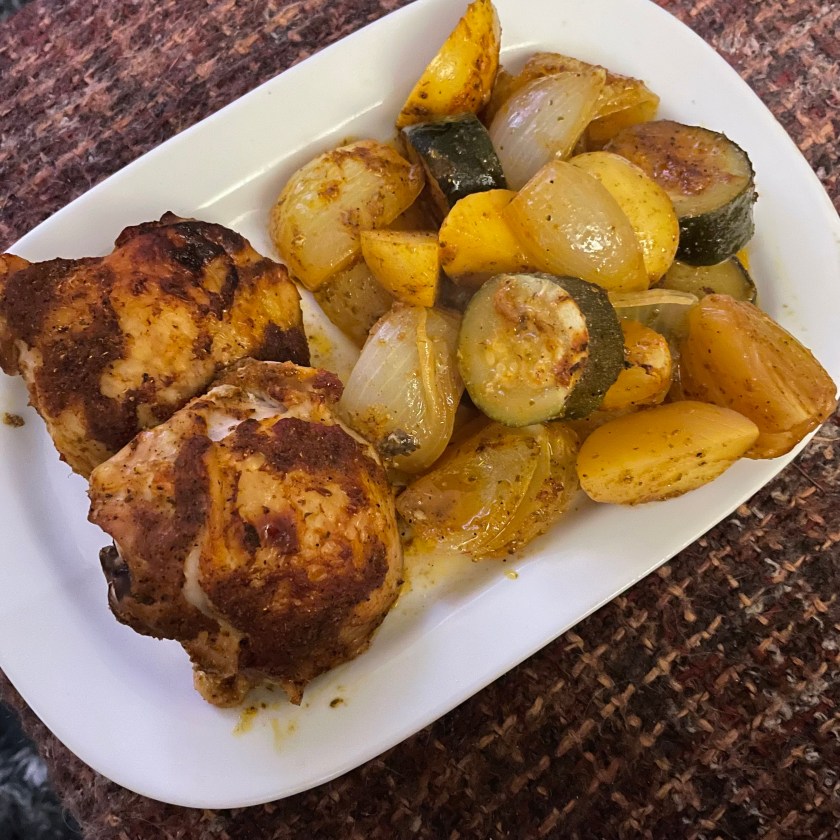
While doom scrolling one night, I came across this recipe video for Middle Eastern Chicken and Potato one pot bake. Mmmm, mm – now that’s my kind of dinner inspiration.
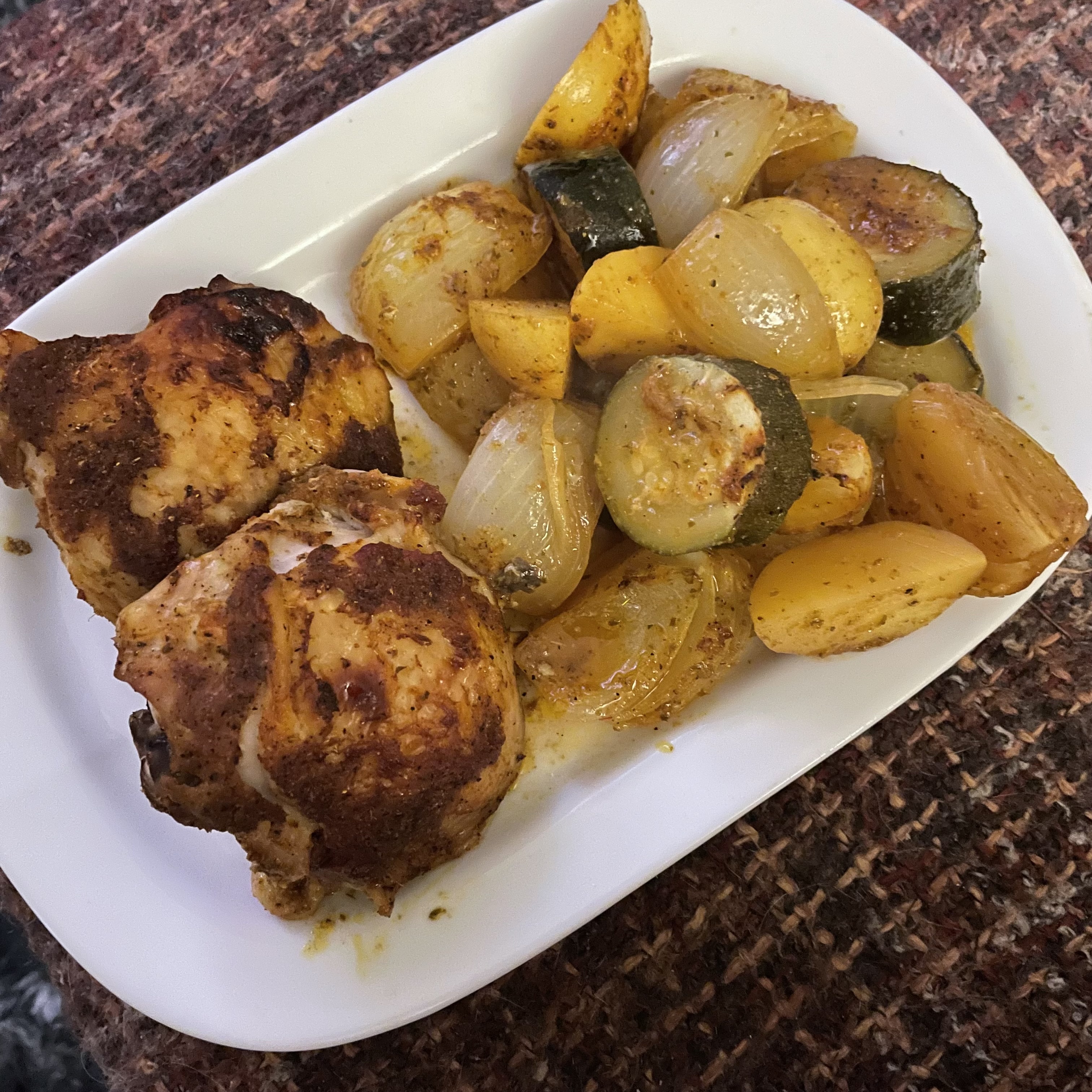
The Things I Like and Will Use
One pot – while the video shows using a pot that is commonly used when starting a meal on the stove and then finishing in the oven, there’s no reason you can’t or shouldn’t use a sheet pan or standard baking dish.
Chicken thighs – bone in with the skin – this is my favorite piece of chicken to cook with. The little extra fat keeps it juicy while cooking and adds that little bit of extra flavor you just can’t get from a chicken breast.
Covered and uncovered cooking. When cooking meat with the bone in, it can be hard to confidently cook it through, so cooking covered – foil or lid – is an excellent way to achieve this. And then the shorter uncovered time is for crisping up the skin so if you are eating that (and you don’t have to), it’s a delightfully crispy crunch.
The Things I’ll Take Inspiration From and Why
Now, I love the idea and all of the individual and collective flavors of this dish, but I find myself on a tighter food budget these days. So here’s how I’m making this work with what’s in my pantry.
Lemon – rather than rely on fresh lemons and their rising cost from tariffs, I keep a bottle of lemon juice in the fridge. It’s controversial with professional chefs, but it’s far more versatile and I don’t have to worry about it going bad or drying out.
And as it happens, I also just bought a ton of Greek lemon infused olive oil, so I’ll also be prepping the baking dish with this lemon oil to contribute to the dish as well.
Tomato paste – I don’t cook anything that uses tomato paste – not even marinara. So I never have this ingredient in the house. What do I have? Ketchup. So tonight, the “sauce” base is ketchup.
Aleppo pepper – that’s a pretty specific spice that’s not part of my pantry, but in the spirit of peppers with and without heat, I have lots of others. For this, I added a squeeze of Sriracha for just a hint of heat and smoked paprika for the smokiness from dried pepper.
Cumin – so I definitely have cumin, but I was feeling more curry, so I switched. That simple – followed what my palate was more interest in.
Carbs – so this dish as shown in the video is pretty high carb and not at all diabetic friendly, so I made some simple additions and one subtraction to balance this out:
- removed rice – because rice is my least favorite carb
- added quartered onions
- added chunks of zucchini
Both the onion and zucchini are highly traditional additions to meals from countries and cultures east of the Mediterranean to the Indian Ocean and to the Pacific.
Side Note on the Term “Middle Eastern”
I’m nearing my 50th birthday as I make this dinner, and I recall a video excerpt I found earlier this week that challenged the terms “middle East” and “far East” as colonial, and therefore, oppressive terms. Yes, I agree, and I wanted to bring your attention to this. You see, the words “middle” and “east” only have meaning when we know the origin point – middle compared to what? east compared to what fixed point. In this case – it’s London – the center of the British colonial empire.
In that paradigm, then, “East” refers to everything east of the Mediterranean to the Pacific ocean, the middle of which is the Arabic and Indian countries and cultures and the “far” of which is the aggregate of the Asian cultures.
I offer these as generalized geographic assignments for the colonial “Middle East”:
- Western Asia
- Southwest Asia
- West Asia and North Africa (WANA)
I offer these as generalized geographic assignments for the colonial “Far East”:
- East Asia
- Pacific Asia
- Northeast Asia – Korea, Japan, northern China
- Southeast Asia – Vietnam, Thailand, Indonesia
I offer these as generalized geographic assignments for the colonial “Indian subcontinent”:
- South Asia
- The subcontinent
I offer these as generalized geographic assignments for Arabic-speaking regions
- Arab world or Arab states
- North Africa and Arabian Peninsula
These alternatives focus on the geography relative to the region itself rather that in comparison with a conquering or colonial empire center.
One of the obvious challenges to Westerners is that our sense of world geography is likely to confound most in correcting our terminology. Beyond that, these terms have been assigned cultural meaning as well that may not align with the geographic/continental mapping, where a term like “Middle Eastern” is generalize to Arabic speaking countries regardless of their geographic location, and likewise “Far East” to a reductive understanding of Asian to refer to those of Chinese, Japanese, Thai, Vietnamese, Korea, and Indonesian descent.
This discussion deserves far more exploration, so thank you for not skimming just to get to more details about the recipe.
The Ingredients
In the recommended order of preparing (to make it easy to assemble):
- 8 tiny golden creamer potatoes, quartered (or 4 medium or 2 large)
- 3-4 small yellow or white onions, peeled and quartered
- 2 medium zucchinis, cut into 1-inch thick “slices” or round chunks
- 1/2 cup ketchup (or the tomato and pepper paste combo from the original recipe)
- 1/2 lemon juice (bottle or fresh squeezed)
- 1T Sriracha (or 1T Aleppo pepper from the original recipe)
- 1T curry (or cumin from the original recipe)
- 1T garlic powder (or 4-5 fresh cloves minced)
- 1T oregano
- 2t salt
- 1t pepper
- 4-6 chicken thighs, bone in with skin (or breasts or leg quarters)
The Assembly Process
Here’s how to layer it all into your baking dish.
Step 1: wash and chop your potatoes, onion, and zucchini. Drop them all into a greased baking dish, ideally into a single layer. They’ll be squished together, which is good.

Step 2: in a measuring cup or other vessel with a pour spout, add your wet and spice ingredients and then mix well with a whisk or fork.
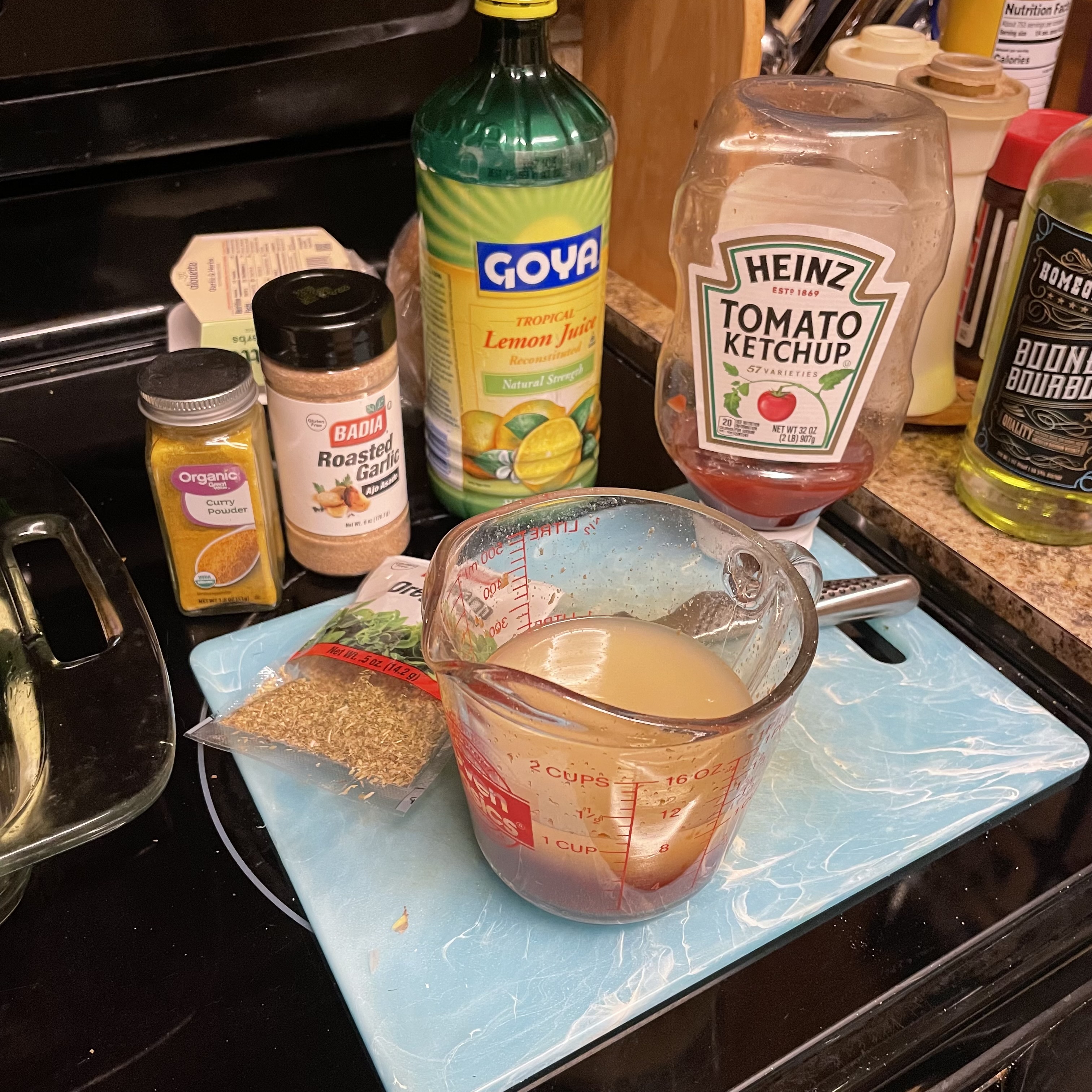
Step 3: pour about half of the sauce over the veggies. Use a spoon or tongs to toss the veggies in the sauce to coat all sides.
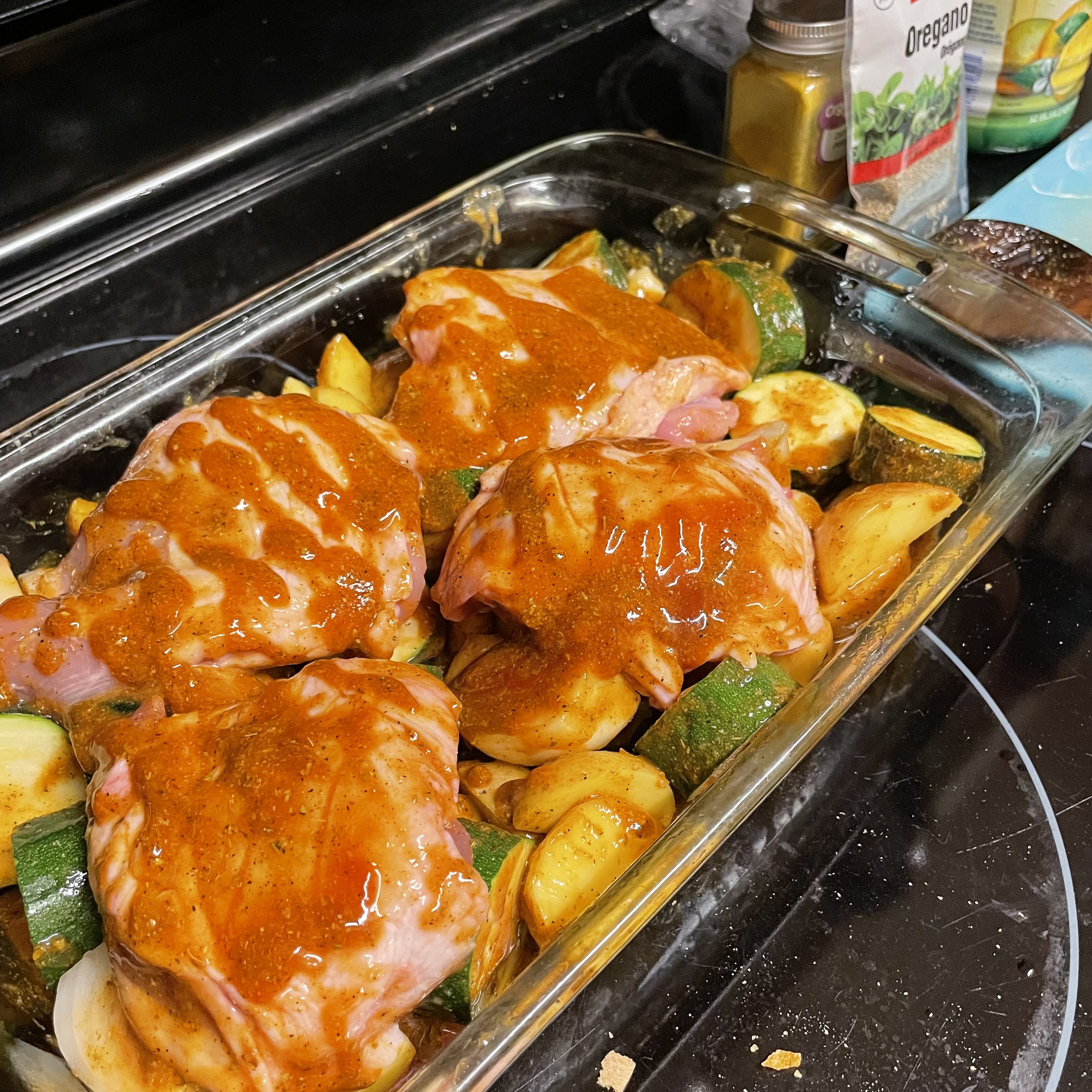
Step 4: place your chicken on top.
Step 5: pour most of the remaining sauce and use your hand(s) to quickly coat the entire chicken thigh – not just the top. Pour any remaining sauce on top of the chicken.
The Cooking Process
Step 1: preheat the oven to 400 degrees Farenheit. NOTE: I do not wait for the oven to fully preheat to put in the dish; my oven rarely takes more than 7-8 minutes total to preheat, so the difference is negligible for such a long-baking dish.
Step 2: cover the baking dish with foil, wrapping the edges snuggly around the end handles.
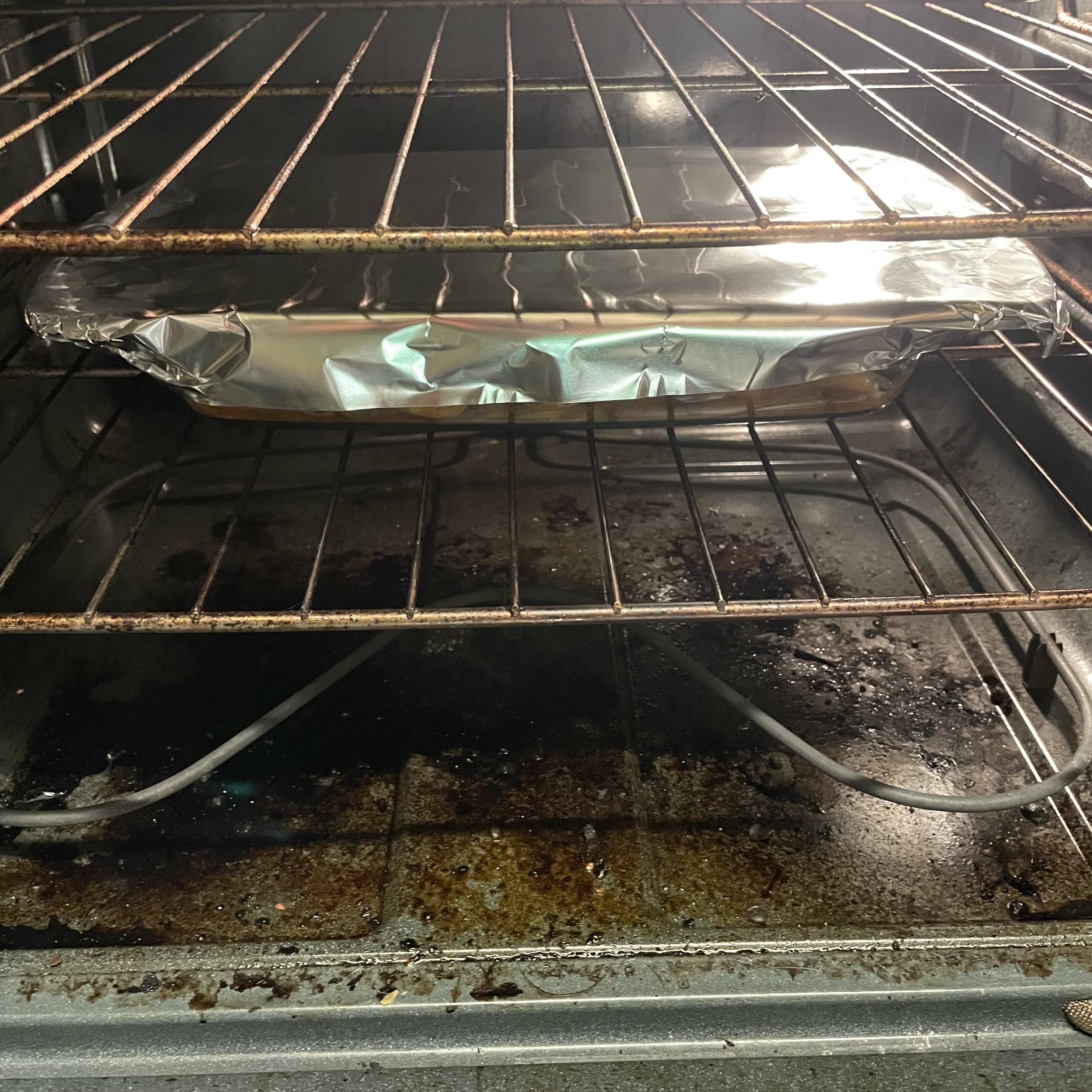
Step 3: bake for 45 minutes with the foil on and on the lowest rack, closest to the baking element (usually at the bottom of the oven).
Step 4: slide out the oven rack and remove the foil lid.
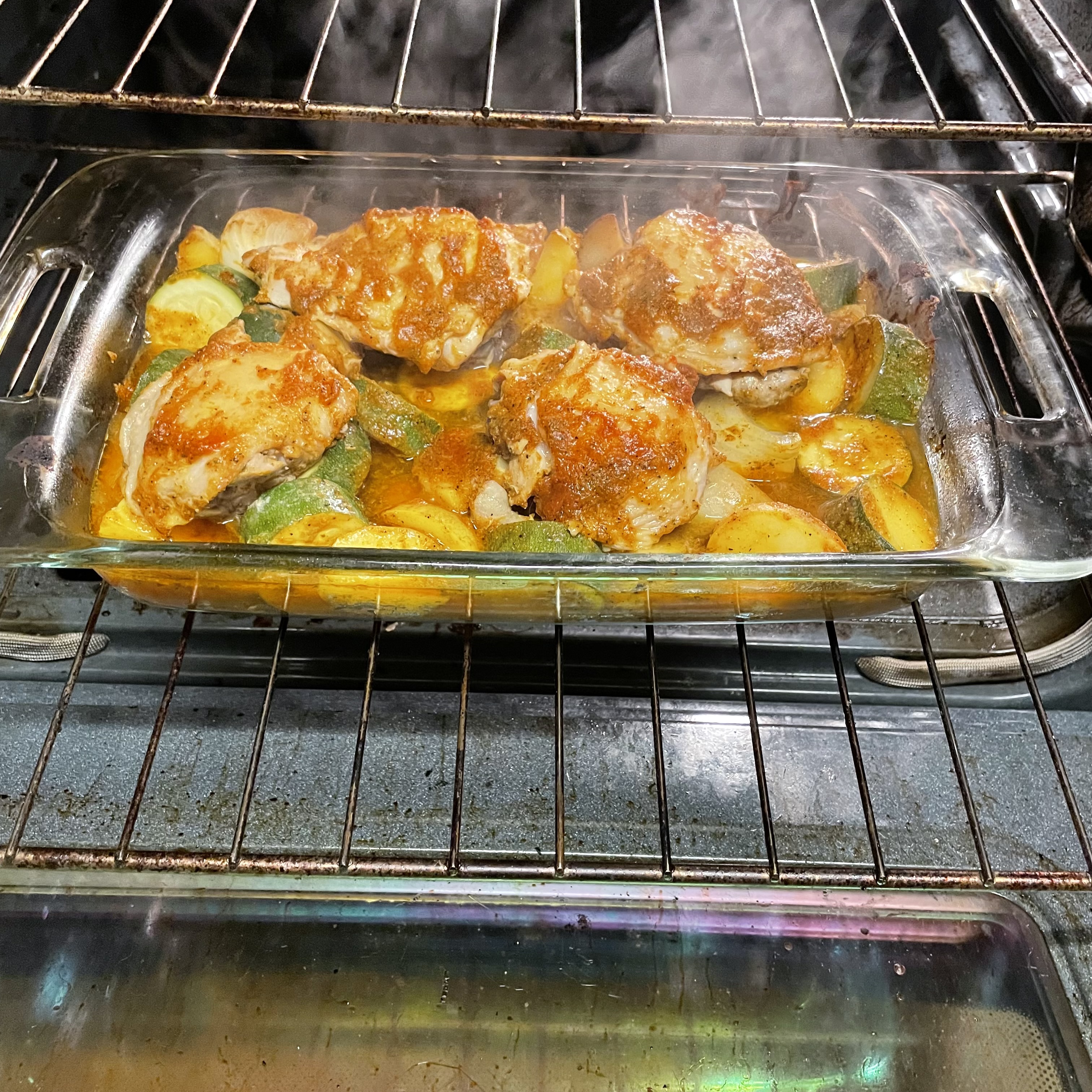
Step 5: push the oven rack back in and set the timer for another 15 minutes. This is an essential step for cooking the skin to be pleasant to eat and ensure the meat is fully cooked.
Step 6: take out of the oven and let rest for 10-15 minutes to cool enough to eat without burning fingers and tongues.









 I’m a #
 Singing about Cooking
