Sun sign, moon sign, and rising sign explained — what data each one needs, where the system comes from, and how to read all three together.
Someone asked me my moon sign recently. I didn’t know what that meant. I’ve been doing crystal work for thirty years and I did not know my moon sign, which tells you something about how compartmentalized my metaphysical education has been. So I Googled it, worked it out, and got an answer that turned out to be half right. That’s usually how it goes with astrology: everybody knows their sun sign, almost nobody knows the other two, and the explanations floating around the internet are either dumbed down to uselessness or written for people who already have a chart in front of them.
Here’s the actual breakdown, and here’s mine.
Three Signs, Three Different Questions
“What’s your sign?” is really three separate questions wearing a trench coat.
Sun sign is the one everyone means by default. It’s determined by where the sun appeared to be positioned against the backdrop of the zodiac on the day you were born. Because the sun moves through roughly one sign per month, your sun sign only requires your birth date. This is the sign in the horoscope column, the one on the mug, the one people mean when they say “I’m a Scorpio.” In the traditional framework, it represents core identity — the central character, the thing that stays consistent.

One disclaimer, because it comes up every few years and someone will bring it to me eventually: there is no second, newer zodiac that quietly replaced this one. The rumor is about a constellation called Ophiuchus, the “serpent-bearer,” which sits on the ecliptic between Scorpio and Sagittarius. The Babylonians knew it existed and left it out on purpose, because they wanted twelve equal slices to match a twelve-month calendar, not thirteen unequal ones. NASA’s Space Place — a science-education site for kids, not an astrological authority — ran an old post explaining this, and it resurfaces on social media roughly every two years framed as “NASA just changed your sign.” It didn’t. Astronomy and astrology are different systems, NASA studies the former, and the twelve-sign tropical zodiac this post is built on hasn’t moved. For the actual debunk, Autostraddle’s explainer and CNN’s coverage of the recurring hoax both walk through it clearly.
Moon sign requires more information and gets talked about a lot less. The moon moves through the zodiac in about 27 days, not 12 months, which means it changes signs every two to three days. Your sun sign is fixed for a full month; your moon sign can flip in an afternoon. That’s why knowing yours requires a birth date and a reasonably accurate birth time — get the day wrong by a few hours near a sign change and you get a different answer. Traditionally, the moon sign is read as the emotional and instinctive layer: how you process feeling, what you do when nobody’s watching, the internal weather system underneath the public-facing sun sign.
Rising sign, also called the ascendant, is the one nobody explains well. It’s the zodiac sign that was rising on the eastern horizon at the exact moment and place of your birth. The Earth completes a full rotation every 24 hours, so the horizon’s position relative to the zodiac shifts constantly — the rising sign can change every two hours. This is the one that demands all three pieces of data: date, precise time, and location, because latitude and longitude change what’s on the horizon just as much as the clock does. Traditionally, the ascendant is treated as the outward presentation — the first impression, the mask, the way you come across before anyone gets past the surface.
Put together, the shorthand some astrologers use is
Sun is who you are,
Moon is who you are alone,
Rising is who people think you are before you open your mouth.
I’m not fully signing off on that framework as gospel, but it’s a useful way to keep the three straight, and it explains why “sun sign” astrology — the kind in the horoscope column — is such an incomplete picture. It’s one-third of the data set, and it’s the one-third that requires the least information to calculate, which is exactly why it’s the one that got mass-marketed.
What It Actually Takes to Find Yours
This is the part that trips people up, including me a few weeks ago:
- Sun sign: birth date. That’s it. The sun’s position is stable enough across a full day that unless you were born within hours of the calendar flipping from one sign to the next, the date alone settles it.
- Moon sign: birth date plus birth time. The moon moves fast enough that date alone isn’t reliable — you can be born on the same day as someone and land in a different moon sign depending on the hour.
- Rising sign: birth date, birth time, and birth location. This one is entirely dependent on the local horizon at a specific moment, which means the same birth minute in two different cities produces two different ascendants.
The rising sign is why “I don’t know my exact birth time” is a real obstacle in astrology circles and not just an excuse. Without a documented time, down to reasonable precision, and a location, the ascendant can’t be calculated at all — you’d be guessing at which of twelve signs happened to be crossing the horizon in a window that moves every couple of hours.
Where Any of This Comes From
None of this is New Age invention. The underlying system is old, and it didn’t originate as a personality quiz.
The zodiac — the practice of dividing the sky into twelve segments and naming them after constellations — comes out of Babylon, in Mesopotamia, roughly the first millennium BCE. Babylonian astronomer-priests were tracking planetary movement against a fixed set of constellations for calendrical and omen purposes long before anyone was assigning personality traits to it. The twelve-sign zodiac they developed is the direct ancestor of the one still in use.
The leap from astronomy to astrology-as-personal-destiny happened in Hellenistic Egypt, after Alexander’s conquests merged Babylonian astronomical tradition with Egyptian and Greek thought, centered in Alexandria. This is where the idea of a birth chart — a snapshot of the sky at the moment of an individual’s birth, used to say something about that individual specifically — took shape. The Greeks contributed the mythology: the zodiac constellations are named for figures out of Greek myth — the bull, the twins, the scales, the scorpion, the archer, the fish — and those origin stories are baked into how each sign is still described today.
The system got its major written codification from Claudius Ptolemy, a Greco-Egyptian scholar working in Alexandria in the 2nd century CE. His text, the Tetrabiblos, laid out the astrological framework — signs, houses, planetary rulerships — in a form structured enough that it became the reference point for astrology across the Mediterranean and, later, the Islamic world and medieval Europe. Astrology moved through Persian and Arab scholarship during the medieval period, where it was preserved and expanded alongside astronomy, before re-entering Europe through Latin translation.
One distinction worth knowing if you’re going to talk about this with any precision: the zodiac used in Western astrology — the one that produced my Scorpio sun — is the tropical zodiac, anchored to the seasons and the position of the sun relative to the equinoxes, not to the actual current position of the constellations in the sky. Vedic astrology (Jyotish), out of the Indian subcontinent, uses a sidereal zodiac, which tracks the actual constellations and has drifted from the tropical system over the centuries due to the Earth’s axial precession. Ask someone their sign in a Western context and a Vedic context and you can get two different answers for the same birthday. They’re not both wrong — they’re two different reference systems built on the same original Babylonian foundation.
The Chart, Since I Went to the Trouble
Birth data: some day in late October, mid-morning, on the northern side of the southeast Atlantic coast of the US — Eastern time. Daylight saving time had already ended for the year by my birth date in my birth year, so that’s a straight Eastern Standard Time reading, no ambiguity about which hour it refers to.
Run against that data:
- Sun sign: Scorpio. Correct on the one thing I already knew.
- Moon sign: Virgo.
- Rising sign: Sagittarius.
That last one is the correction to make out loud. When this came up originally, the answer Google and I landed on was “Virgo moon rising,” which collapses two separate placements into one phrase. Moon and rising are not the same axis, and mine don’t match — the moon is in Virgo, the ascendant is in Sagittarius. It’s an easy conflation to make when you’re new to reading a chart, since both terms show up back-to-back and neither gets explained in the places most people first encounter them. Now I know better, and so does anyone reading this who’s about to make the same mistake.
Scorpio sun, Virgo moon, Sagittarius rising. Three different questions, three different answers, and it took a birth certificate’s worth of information to get all three.
What Each Sign Actually Carries
Since all three of these are mine now and not just an abstraction, here’s what the tradition assigns to each — traits, strengths, the anxieties that come attached, and the correspondences (color, stone, element, mythological figure) that show up across astrology and crystal work alike.
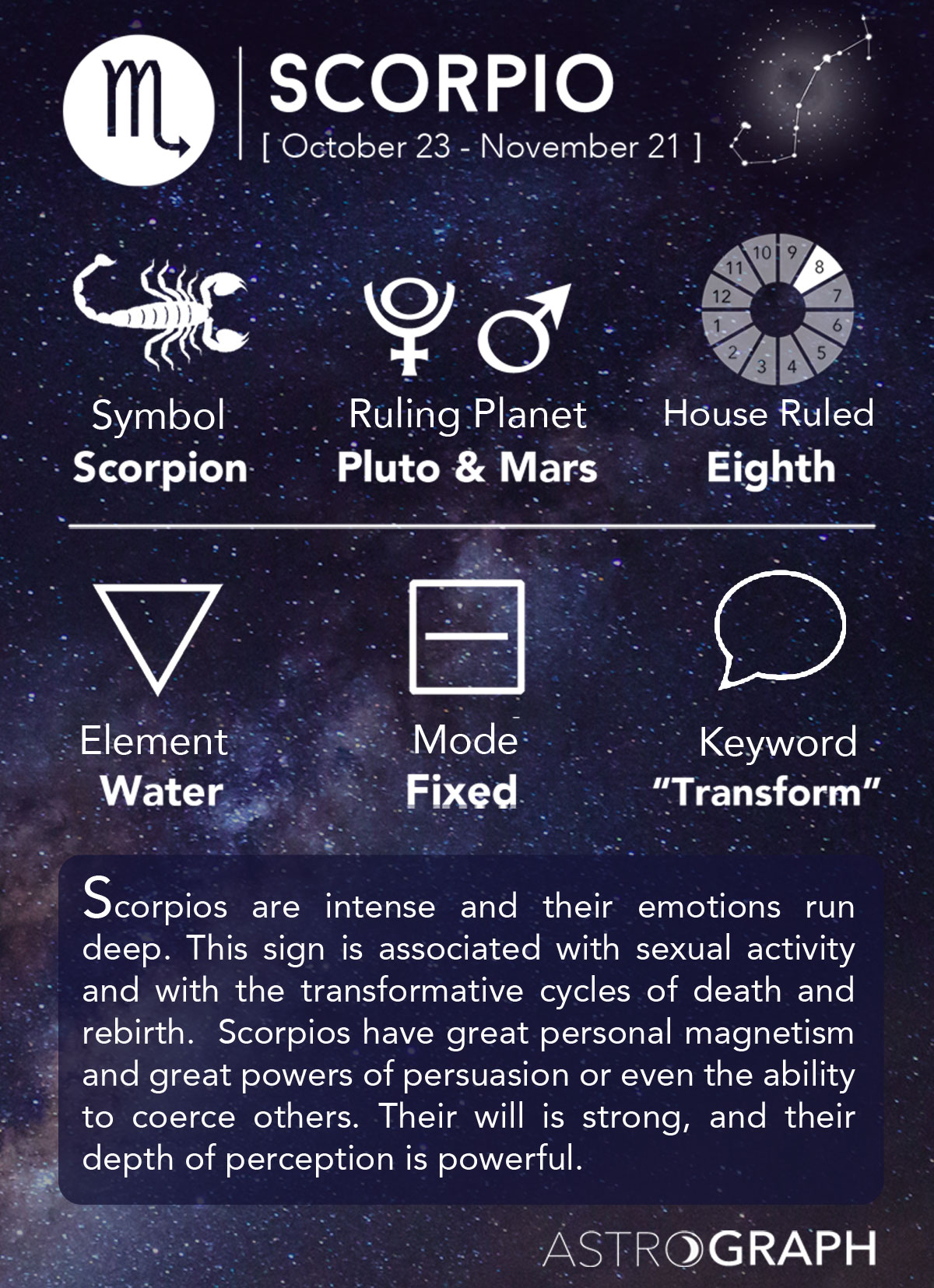
Scorpio (Sun) — Water, ruled by Mars/Pluto
- Traits: intense, magnetic, private, strategic, perceptive to the point of unsettling other people
- Strengths: resilience, loyalty once earned, investigative depth, emotional courage — willingness to go into the dark room other signs avoid
- Weaknesses / anxieties: jealousy, control issues, difficulty trusting, a tendency to hold grudges and read betrayal into ambiguous situations
- Colors: deep red, black, maroon
- Stones: obsidian, garnet, malachite, black tourmaline
- Mythological figure: Hades/Pluto, ruler of the underworld — the sign most associated with death, transformation, and what’s hidden beneath the surface
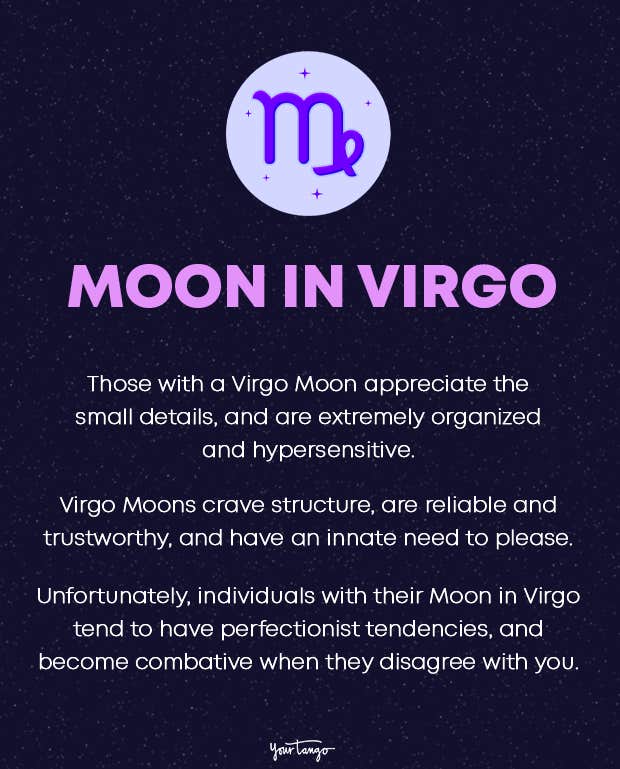
Virgo (Moon) — Earth, ruled by Mercury
- Traits: analytical, meticulous, practical, modest, oriented toward being useful
- Strengths: precision, reliability, discernment, a work ethic that doesn’t need supervision
- Weaknesses / anxieties: perfectionism, overcriticism turned on self and others, anxiety rooted in loss of control, a habit of overthinking small details into large problems
- Colors: hunter green, navy, earth tones
- Stones: moss agate, amazonite, peridot, citrine
- Mythological figure: Astraea, the virgin goddess of justice and harvest who, in one version of the myth, ascended to the stars and became the constellation Virgo when she abandoned a corrupted earth — also linked to Demeter/Ceres, goddess of the harvest
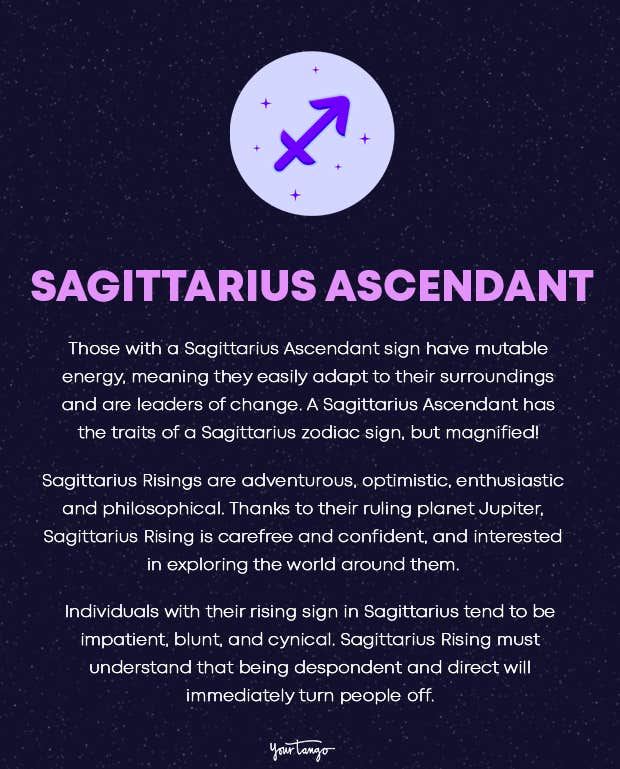
Sagittarius (Rising) — Fire, ruled by Jupiter
- Traits: adventurous, philosophical, blunt, optimistic, allergic to being fenced in
- Strengths: honesty, big-picture vision, enthusiasm that’s genuinely contagious, a broad-mindedness that resists small thinking
- Weaknesses / anxieties: restlessness, tactlessness, commitment aversion, a tendency to overpromise and then need an exit
- Colors: deep blue, purple, turquoise
- Stones: turquoise, lapis lazuli, sodalite, amethyst
- Mythological figure: Chiron, the centaur — unlike most centaurs in Greek myth, wise and civilized rather than chaotic, known as a teacher and healer, which fits an ascendant that’s the first thing people meet before they get to the rest of the chart
Does this remind you of anything? If you’ve ever taken a “personality” assessment (likely for a job), this might feel very similar, especially in the output. Things like DISC with it natural and adaptive styles of communication feels very much like the three angles from which you can be seen. I see some Enneagram references in here as well. In some ways, astrology is the original personality test.


